If you are searching for an Apollo alternative, you either pay for it and something has gone wrong. Or you want to know whether Apollo is actually worth paying for.
I answer both questions. From people already using Apollo, I hear the same three complaints:
Outdated or low data accuracy
Do not have credit rollover
Database size is less than 240M data
None of that makes Apollo a bad tool. Apollo works well for a solo founder, a single SDR or a team running smaller operations.
So I tested 11 Apollo alternatives against those three and shared what each tool does well, where it falls short, and what you actually pay once the credits run out.
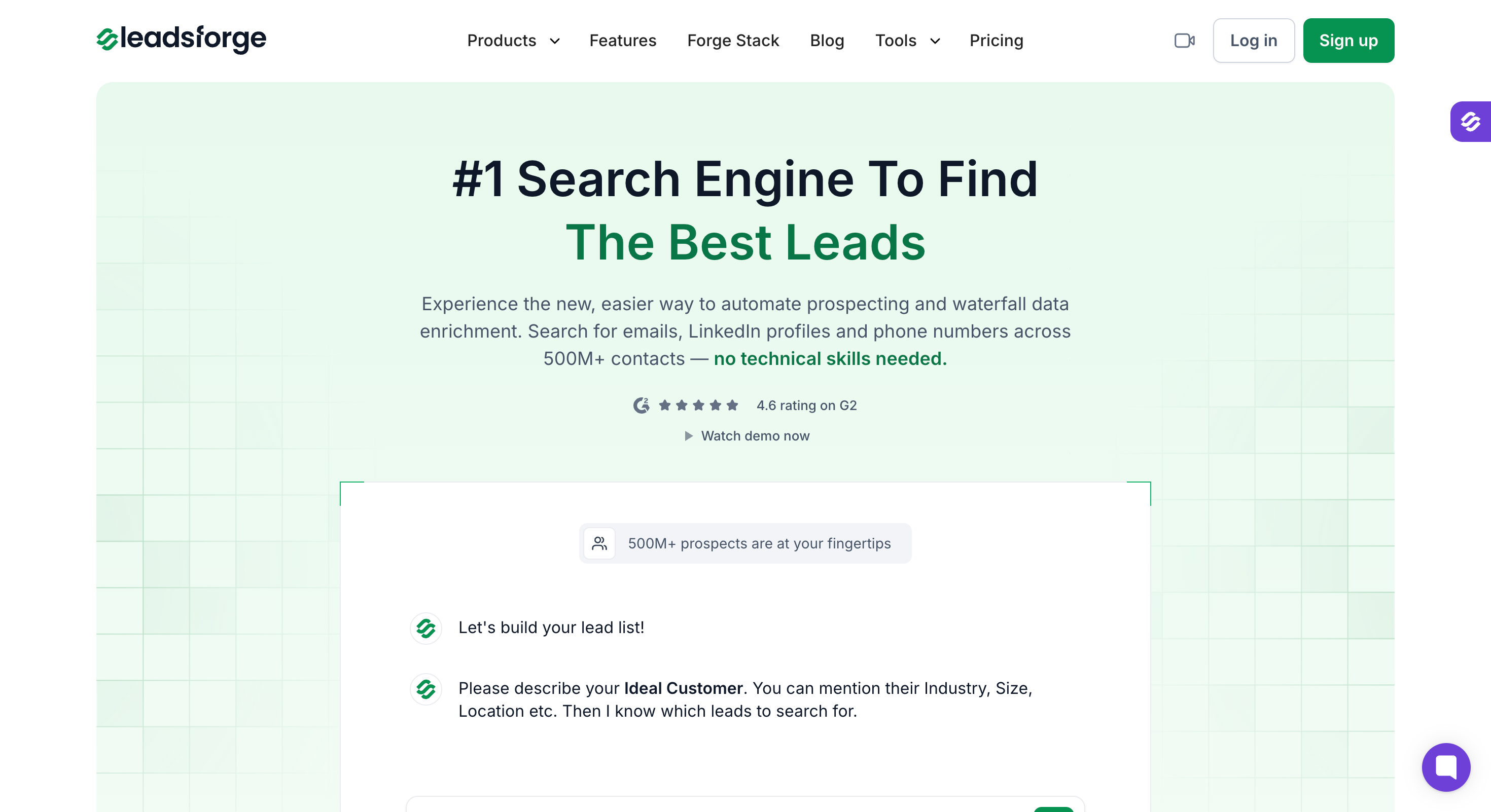
Leadsforge: AI lead search with waterfall enrichment across multiple providers and supports multiple lead workflows. Best overall for teams tired of Apollo's credit reset.
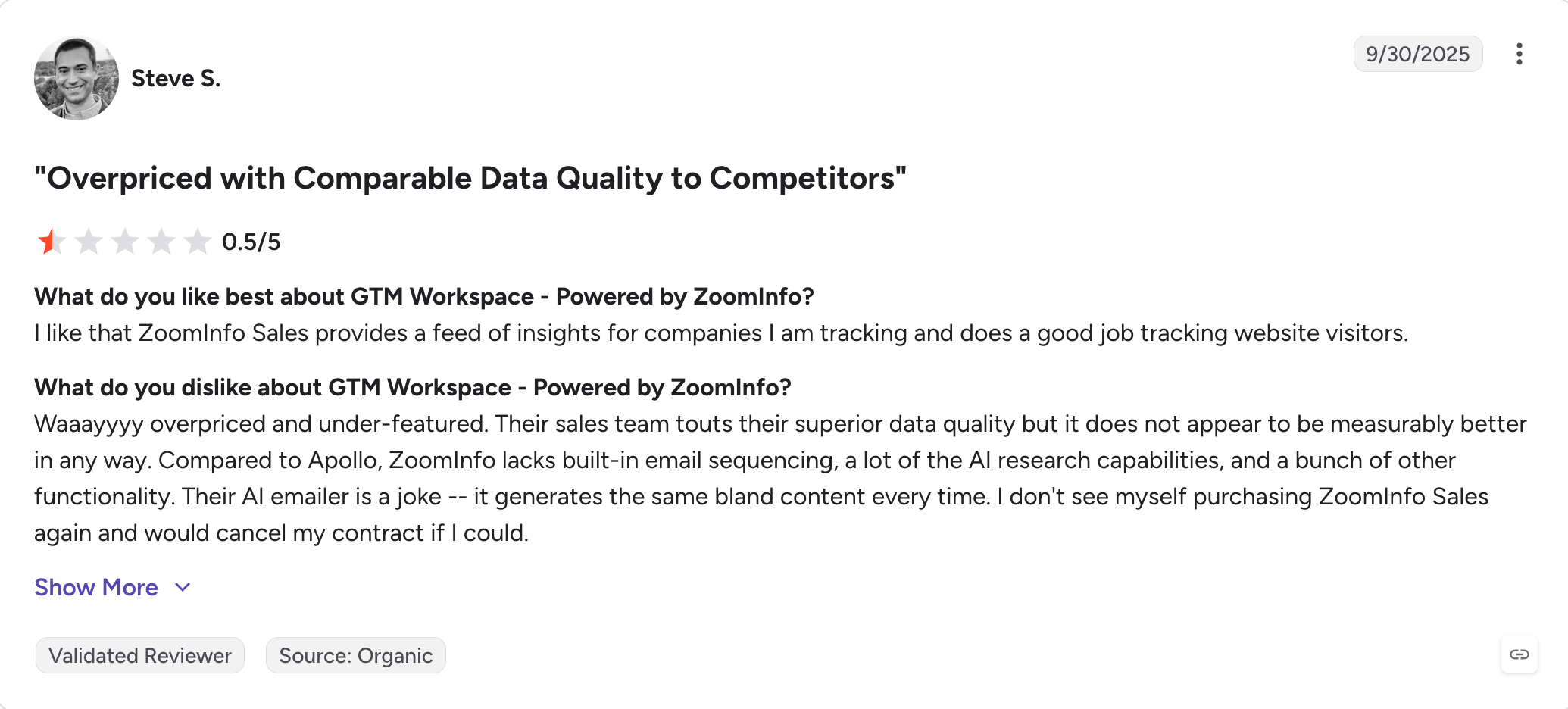
ZoomInfo: Best if you need the deepest US firmographics, with native intent and website visitor tracking. Sold on annual contracts through a sales team, so budget accordingly.
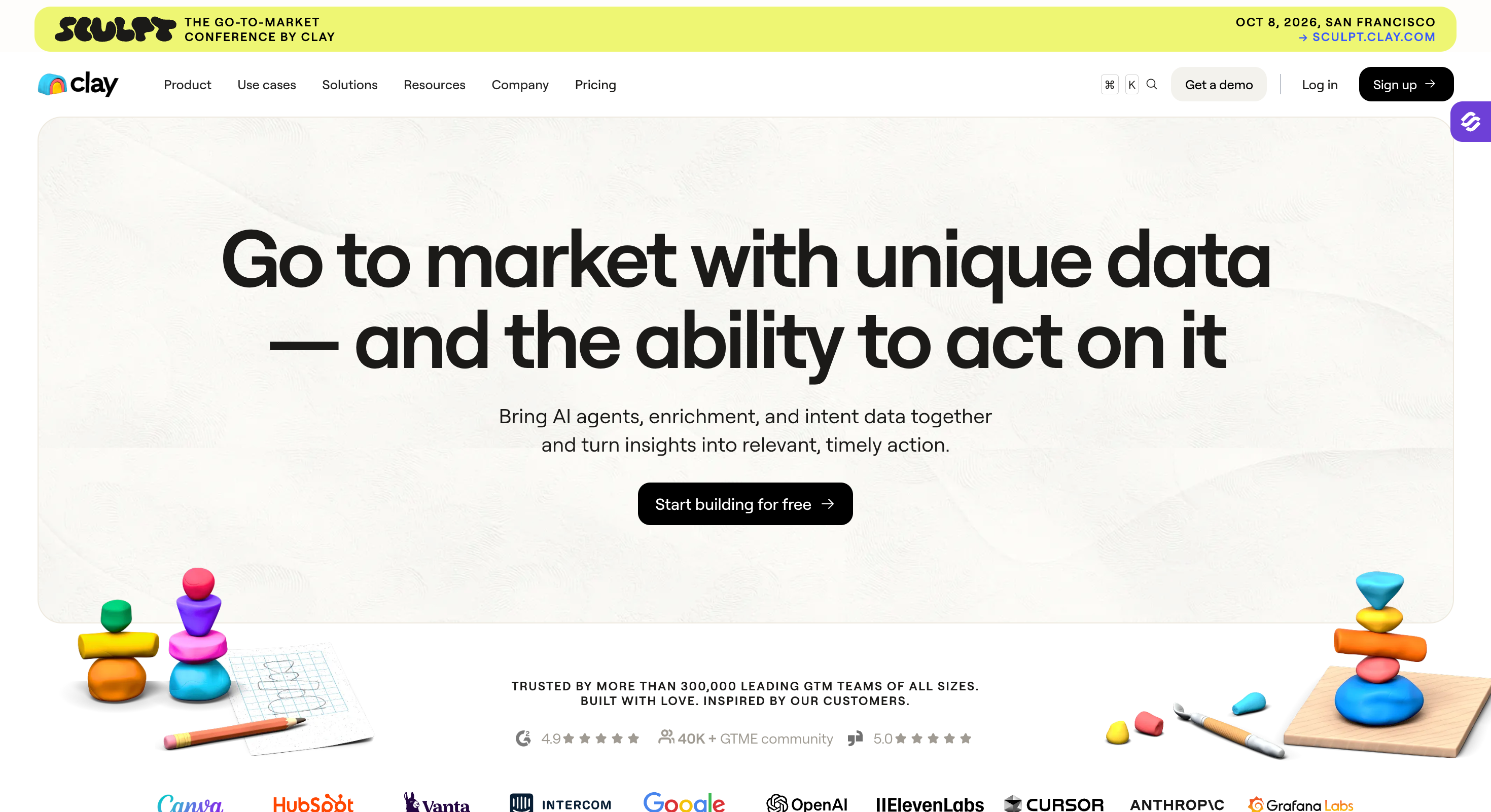
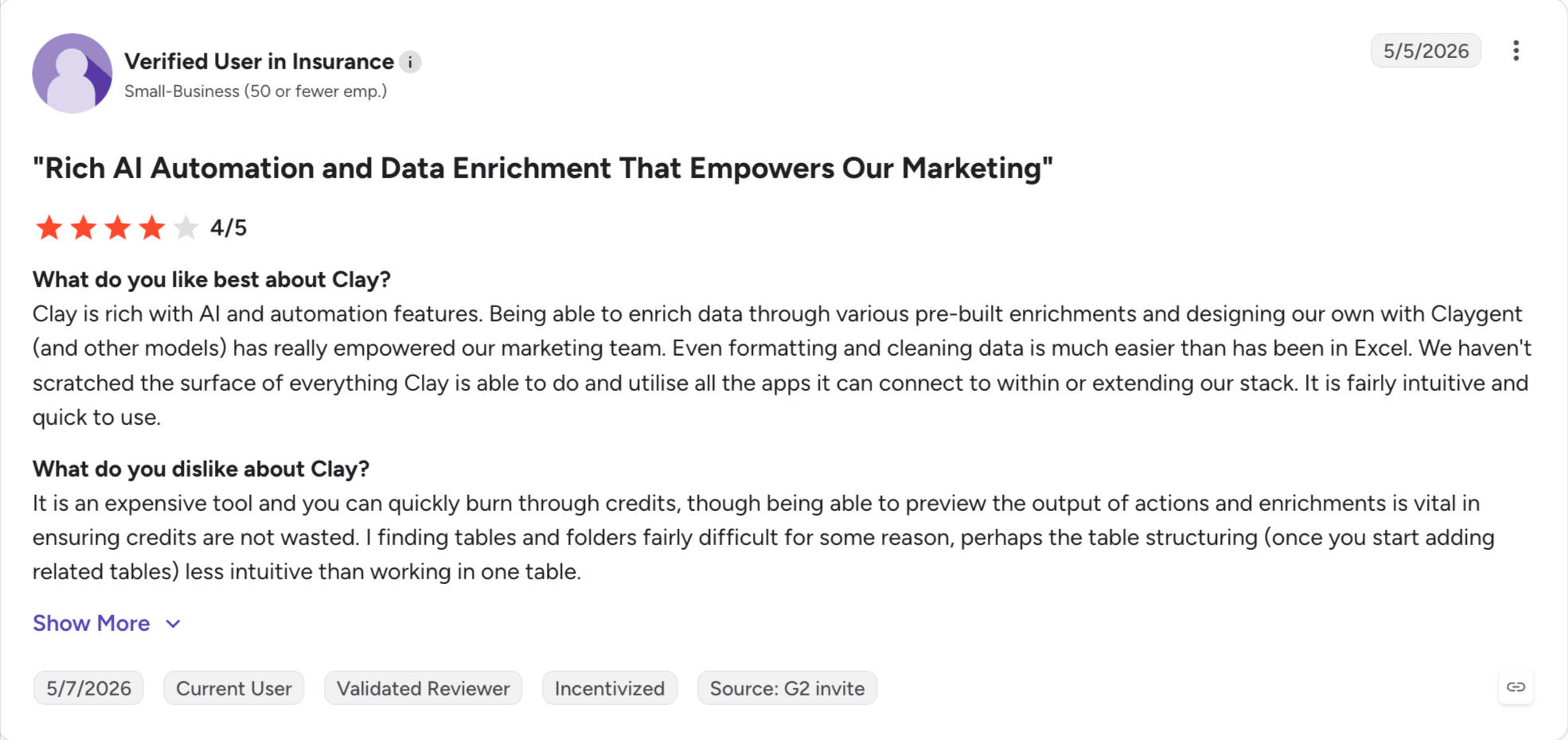
Clay: Best if you would rather build the enrichment than buy it. Claygent researches each row across 100+ providers, but you assemble the table yourself.
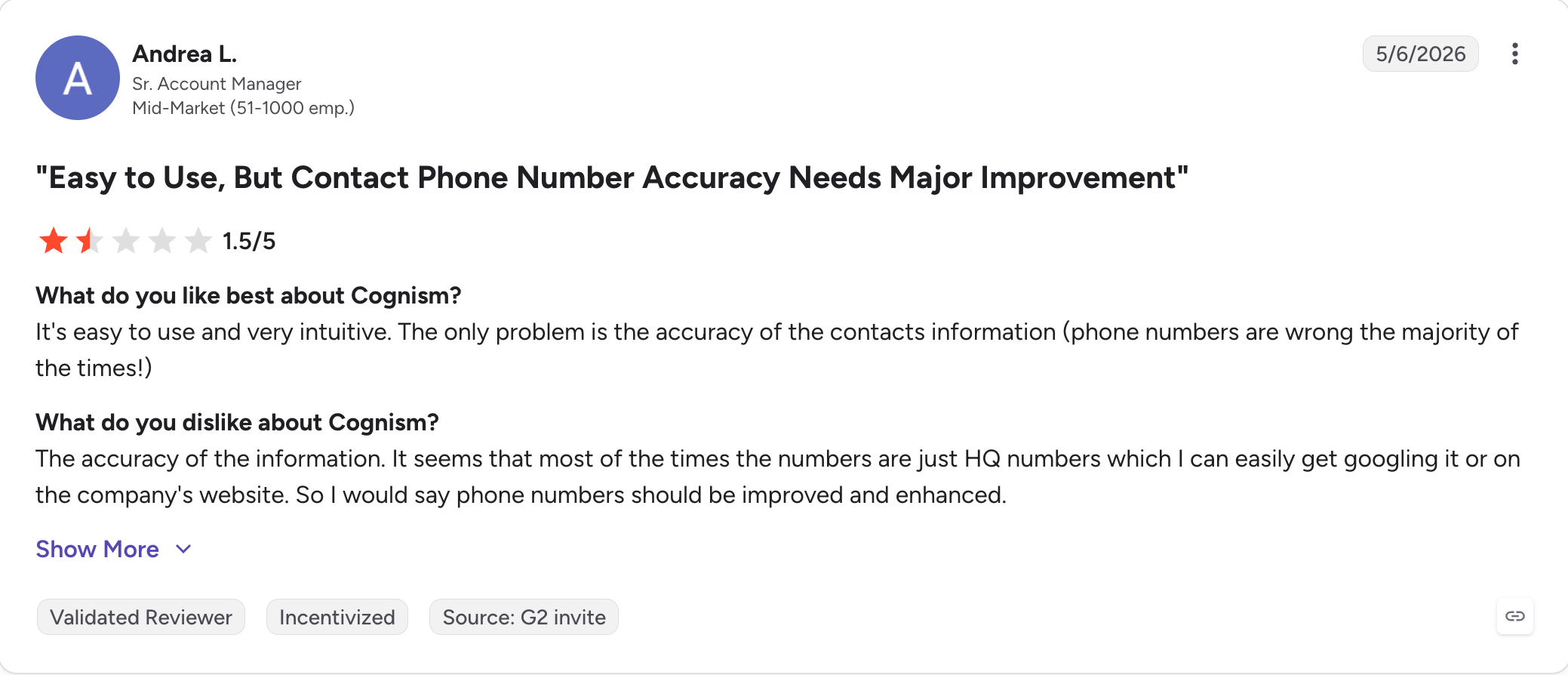
Cognism: Best for selling into the UK and Europe by phone. You get verified mobiles and GDPR compliant DNC screening, plus Kaspr for self-serve LinkedIn work.
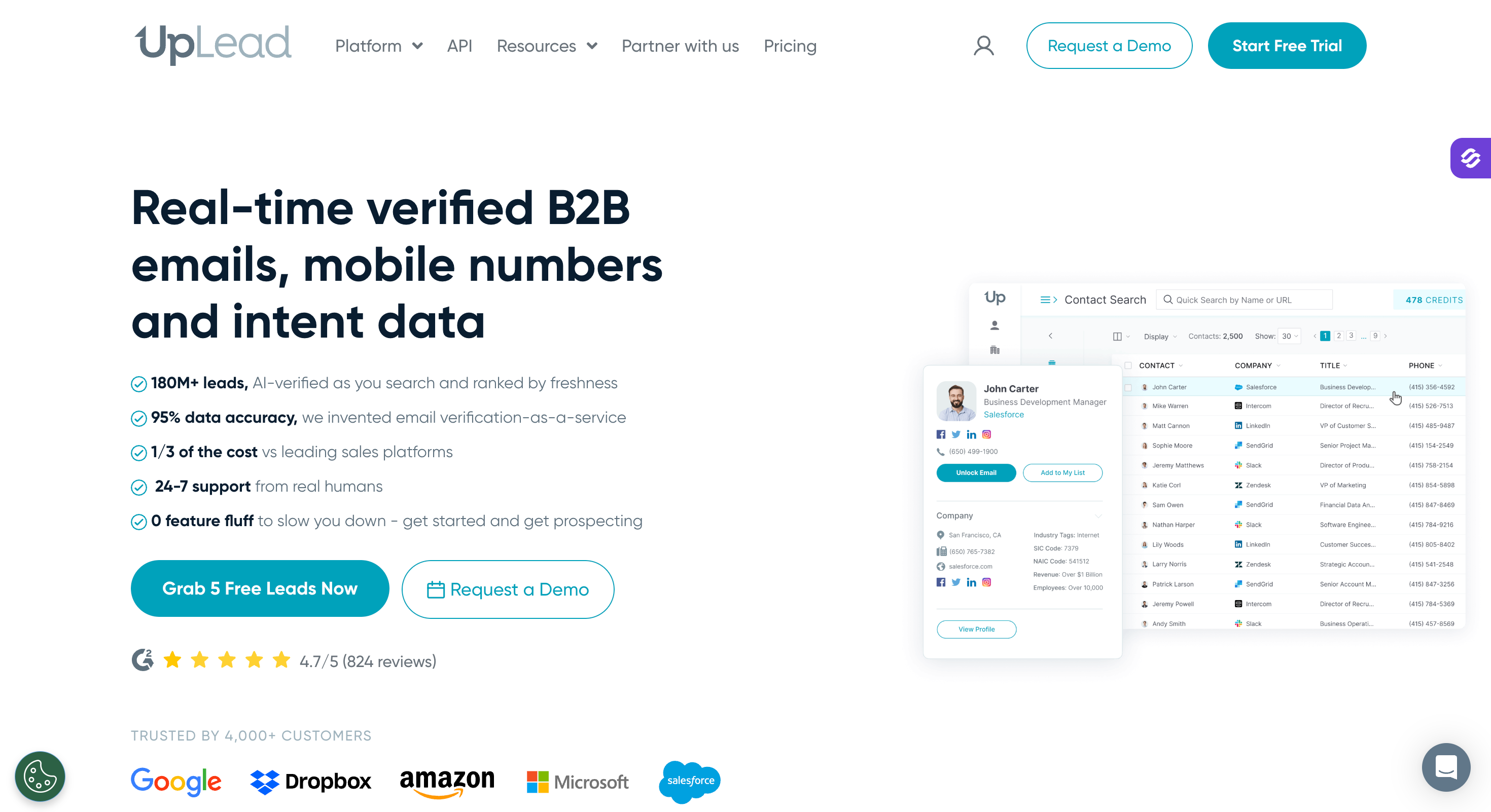
UpLead: Best if you care more about bounce rate than list size. It carries the only accuracy claim here the review record supports, though its free tier runs seven days.
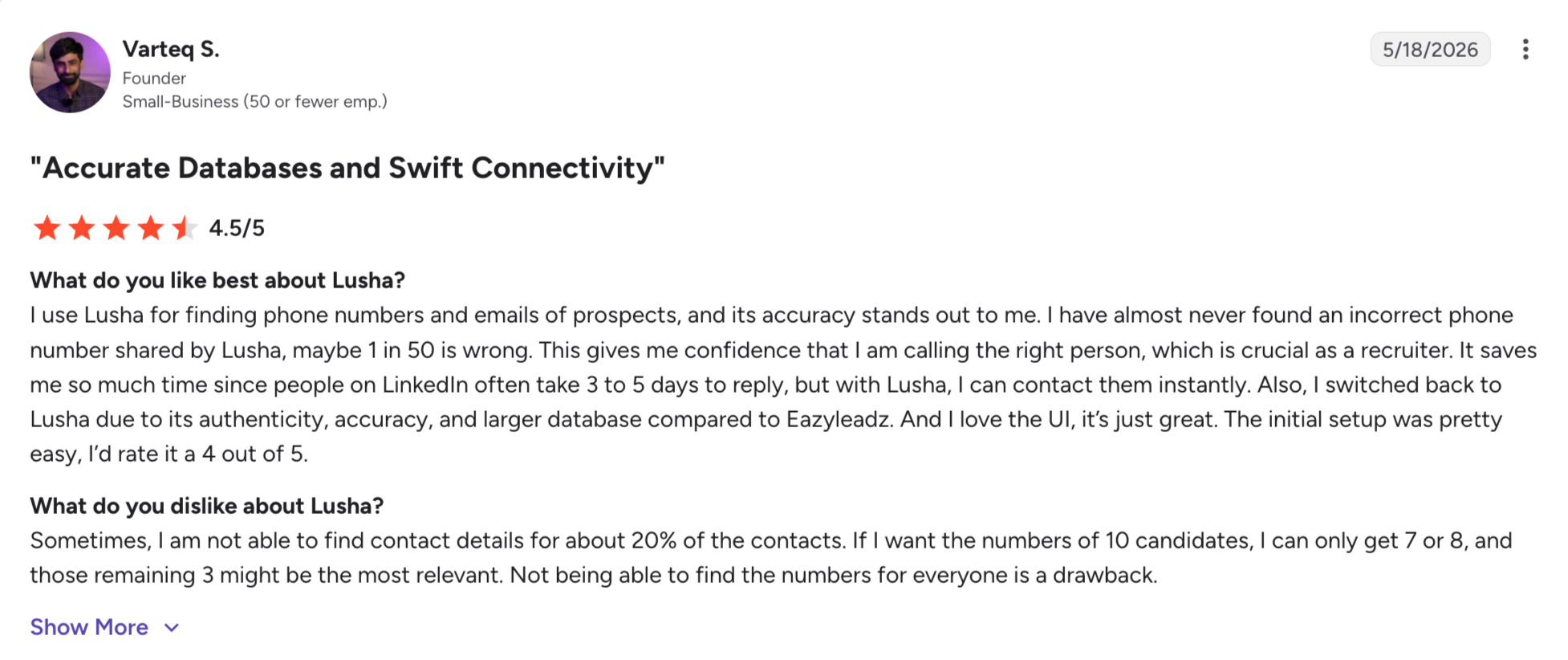
Lusha: Best for reps grabbing one contact at a time from LinkedIn. The Chrome extension needs almost no learning curve, but a phone costs about ten times an email.
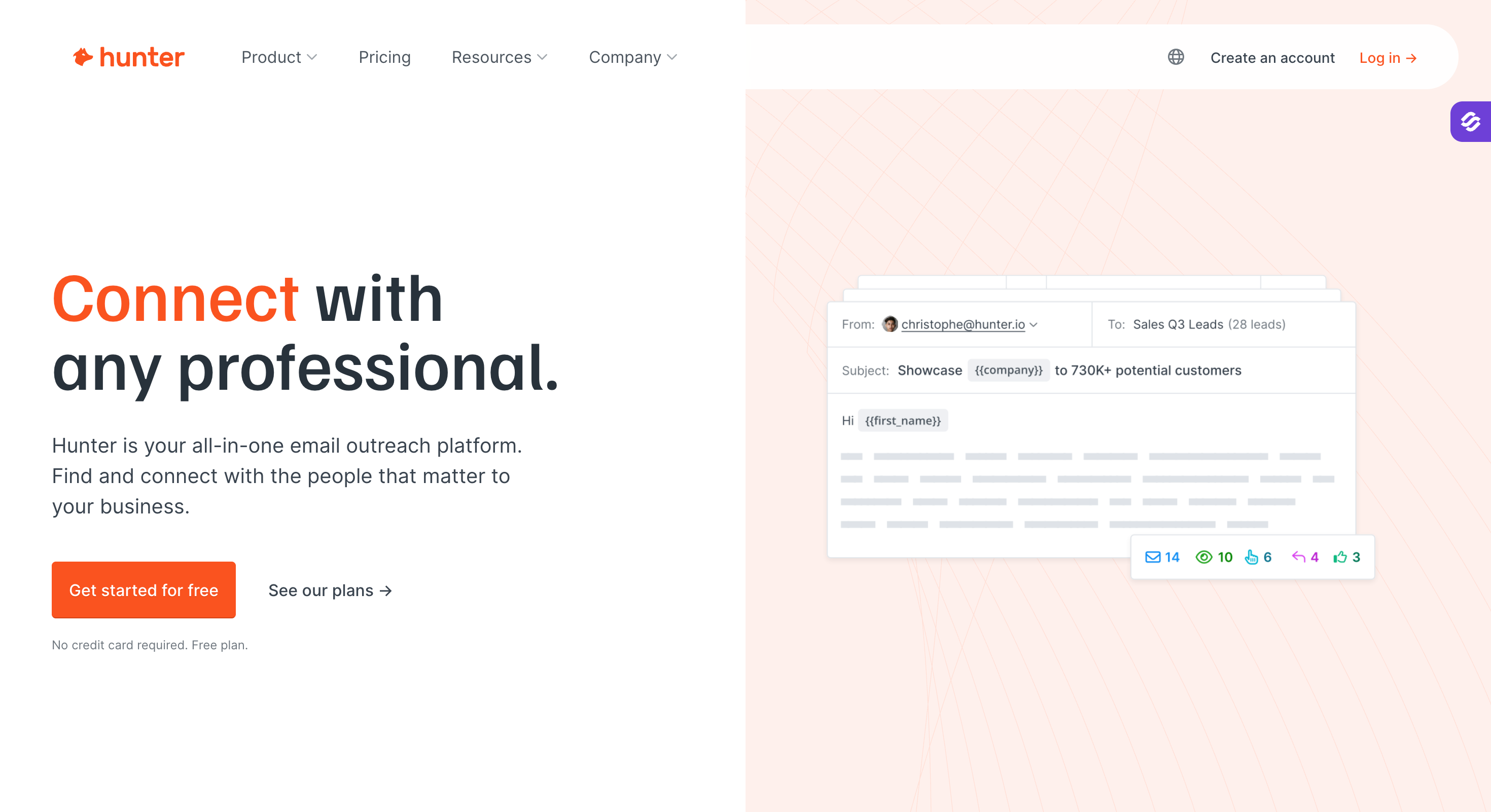
Hunter.io: Best for teams working from company domains, with unlimited team members on every plan. No phone data at any tier.
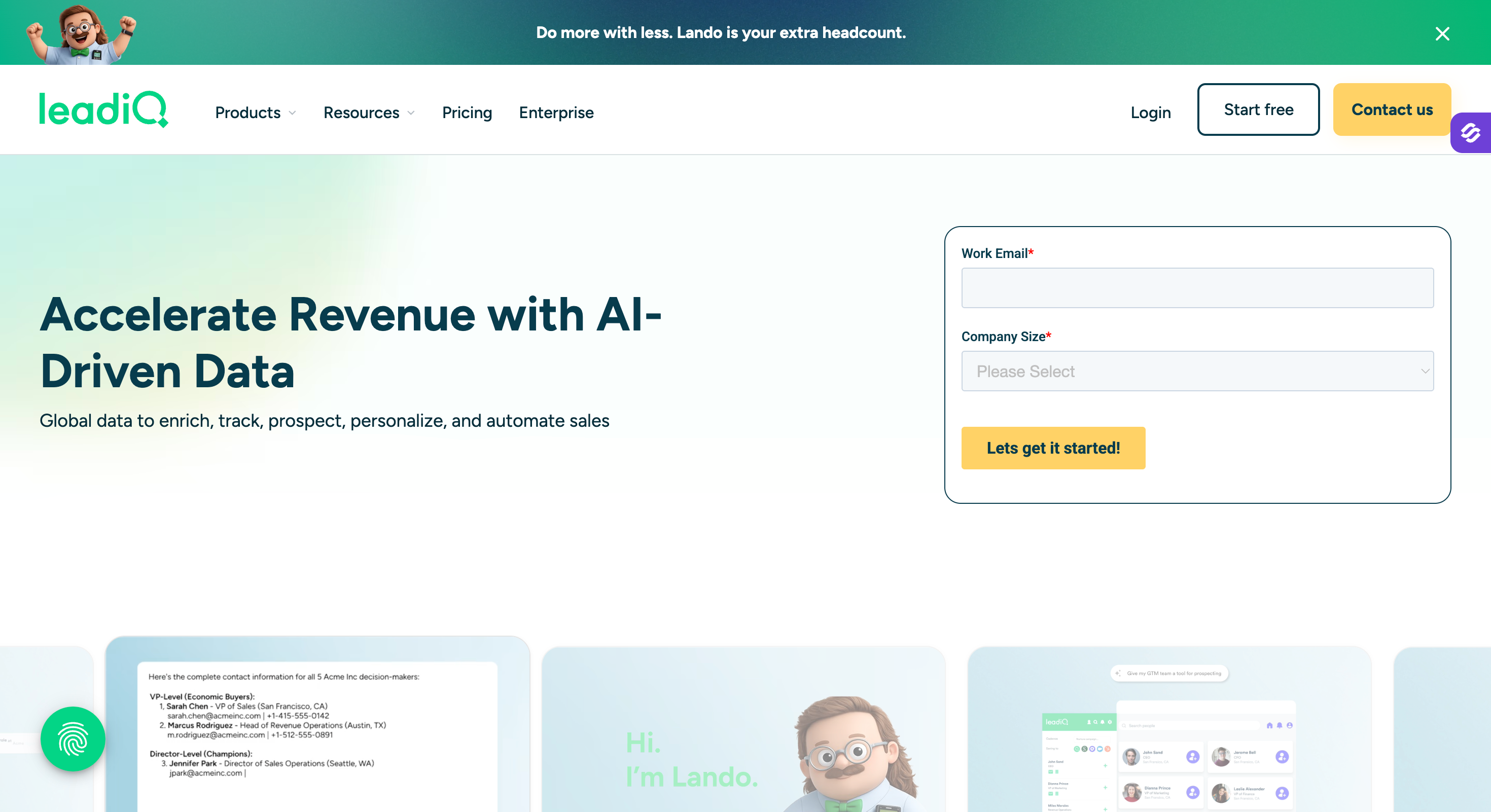
LeadIQ: Best for SDR teams capturing from LinkedIn straight into the CRM. Five users come included at every step of the credit slider.
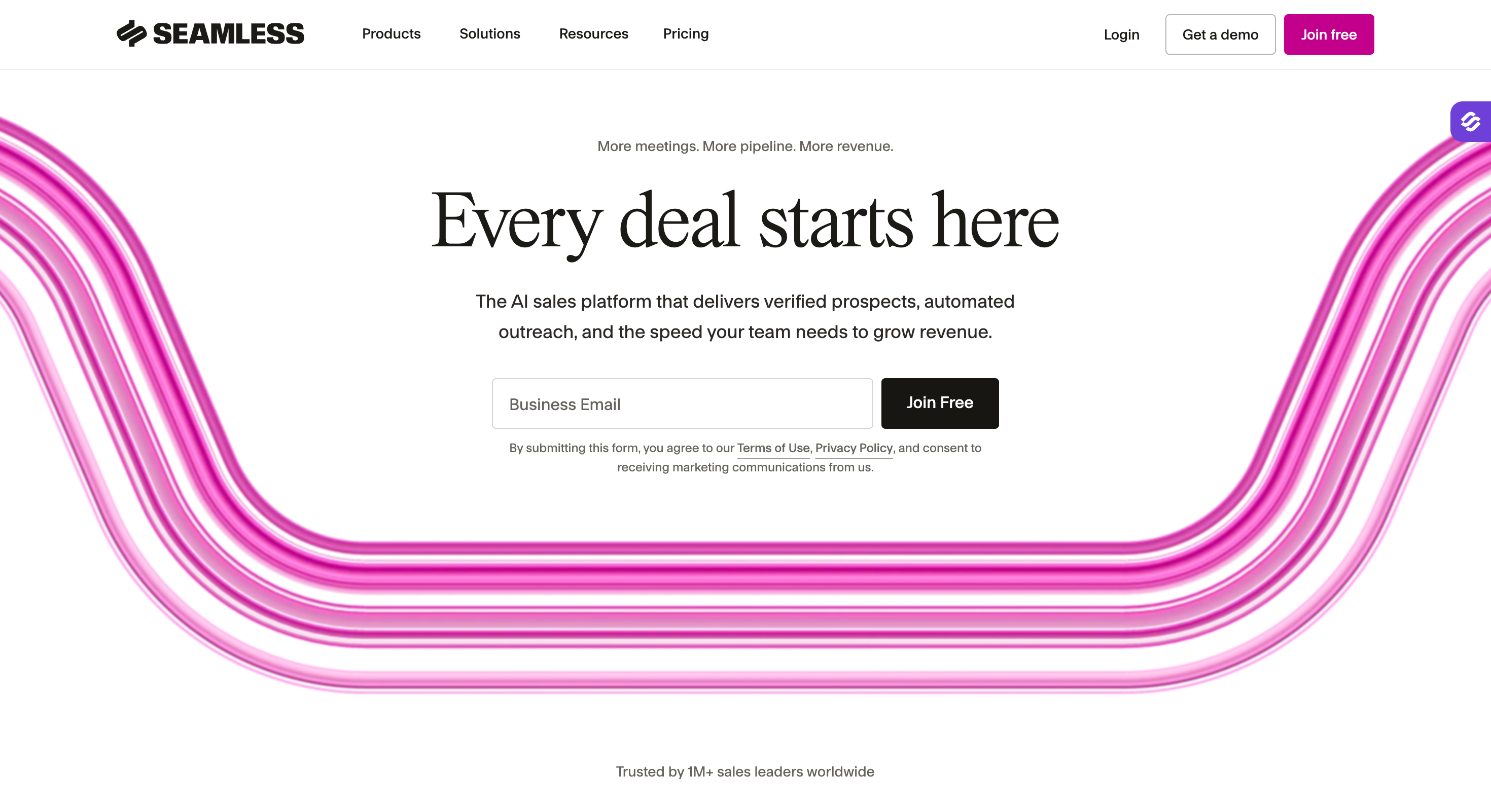
Seamless.AI: Best if you want a real-time search engine and will negotiate on contract terms. Recent hires surface faster, though the 60-day cancellation notice and accuracy complaints are real.
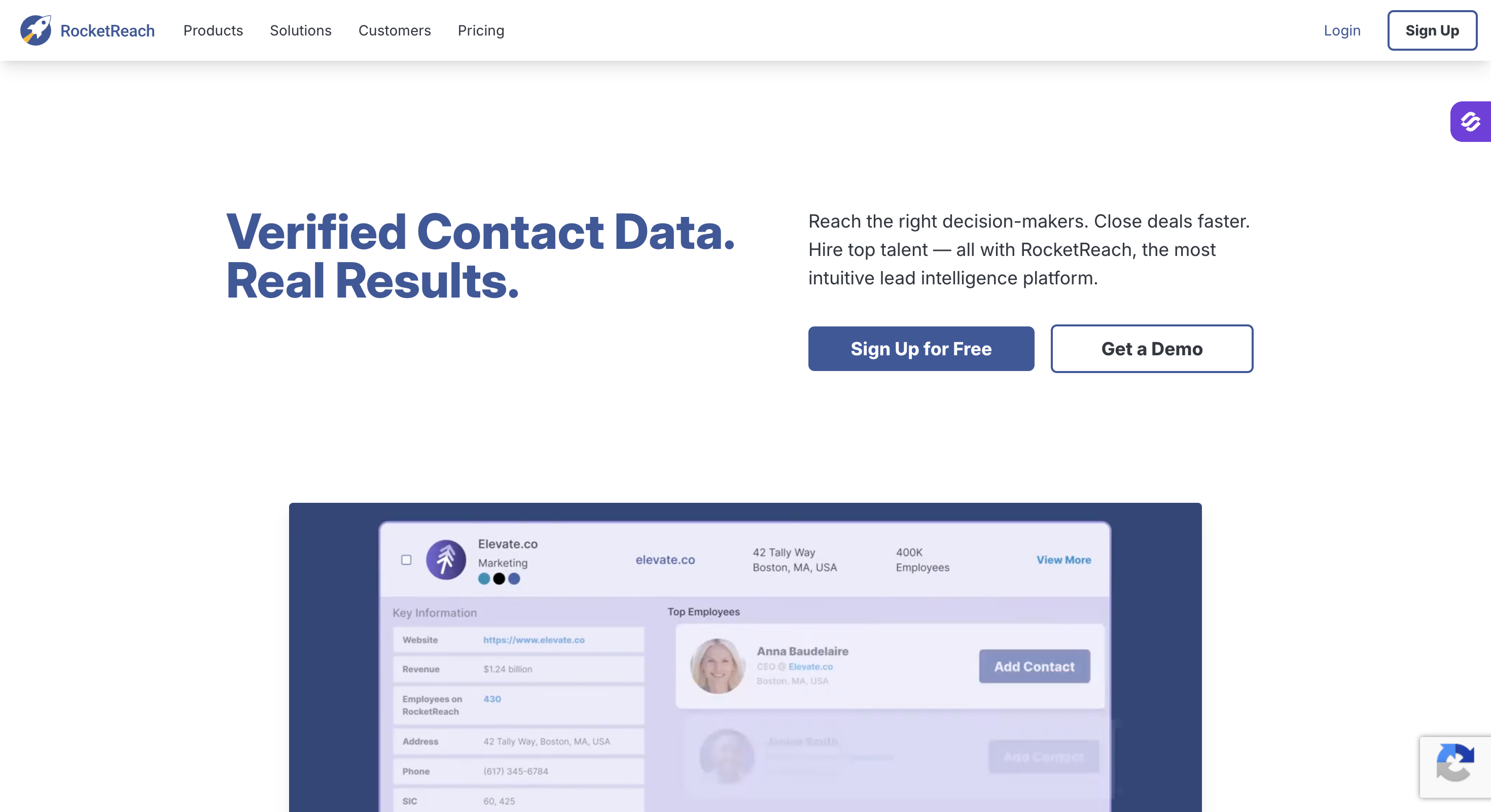
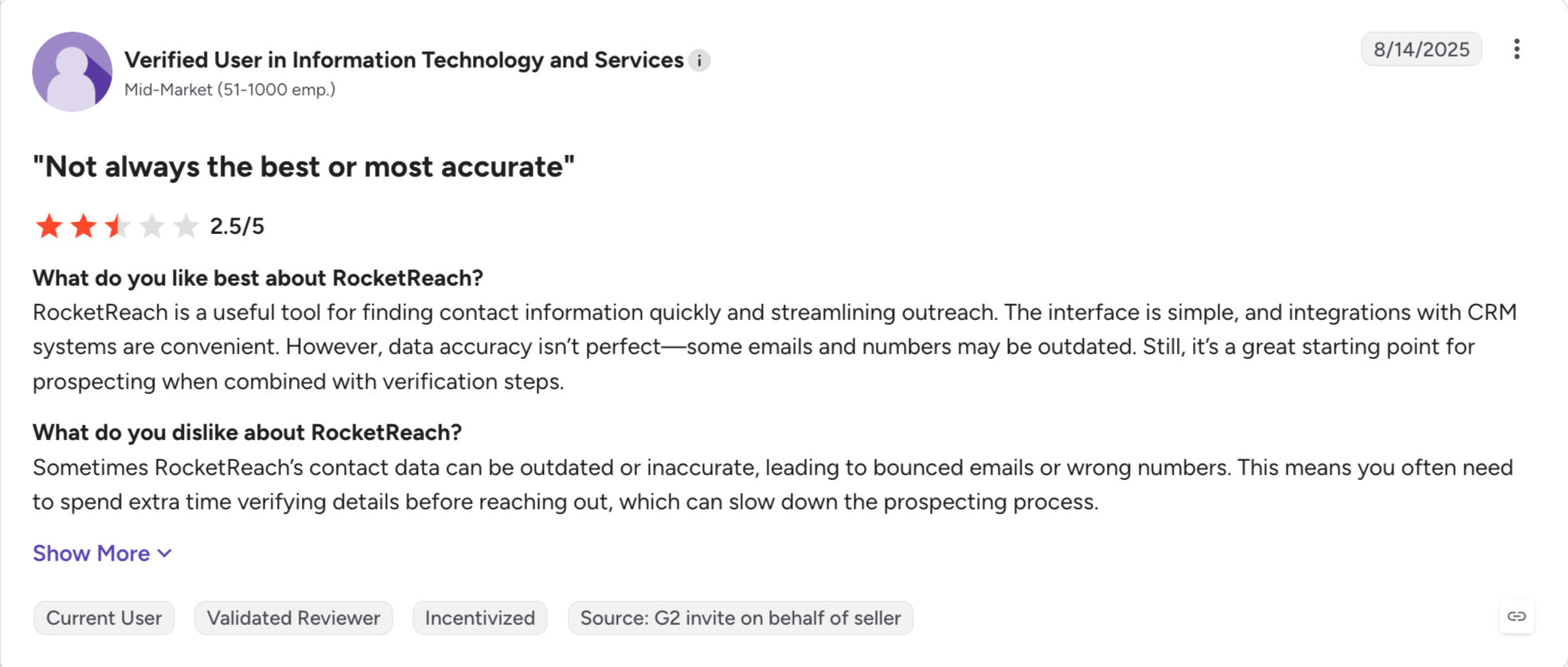
RocketReach: Best for senior-contact lookups, with a claimed 700M+ profiles and strong coverage of hard-to-reach executives.
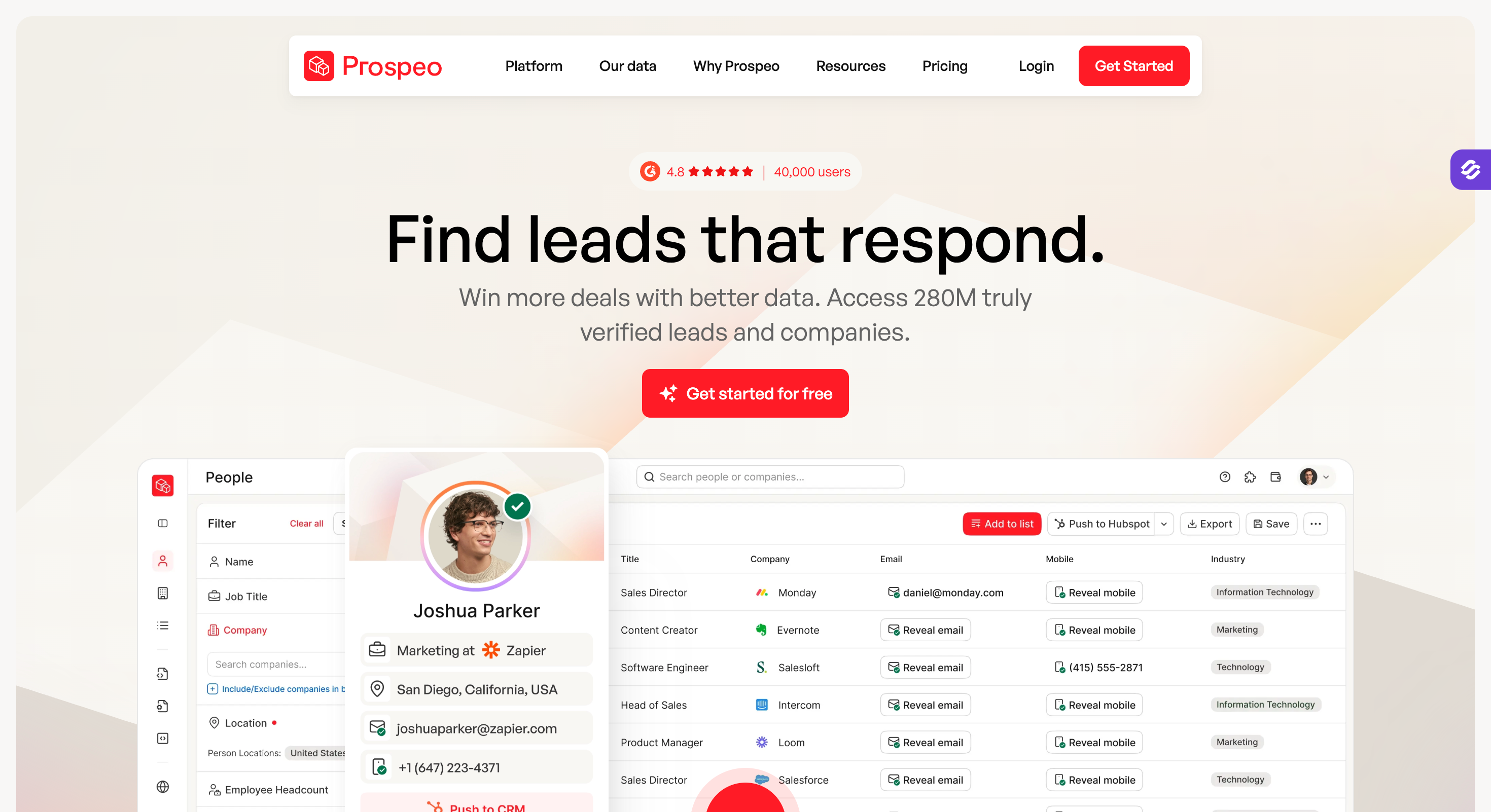
Prospeo: Best for solo operators who need email and phone without a subscription. The free plan never expires and gives 100 credits a month.
Keep scrolling for the full comparison table and per-tool breakdowns.
Feature Comparison: Top 5 Apollo.io Alternatives at a Glance
GTM teams and agencies that want waterfall enrichment and multiple lead workflows
$49/month, or $588/year billed annually
500M+ contacts, 20+ providers
100 credits on signup
Credits never expire
4.7
ZoomInfo
Enterprise teams with a RevOps function
Quote only, annual contracts
500M+ contacts, 100M+ companies
ZoomInfo Lite, 10 export credits a month
No
4.5
Clay
RevOps teams who would rather build the enrichment
$167/month billed annually
No database. 100+ providers
100 data credits and 500 actions
Up to 2x the monthly allowance
4.6
Cognism
Teams selling into the UK and Europe by phone
Quote only, demo required
Not disclosed. Strongest in EMEA
None. Kaspr gives 5 phone and 5 email credits
Re-reveals are free
4.5
UpLead
Teams who care more about bounce rate than list size
$74/month annual, $99 monthly
160M+ contacts
7-day trial, 5 credits
No
4.7
Lusha
Reps grabbing one contact at a time from LinkedIn
From $37.45/month annual
150M+ profiles
40 credits a month
Not published
4.3
Hunter.io
Teams working from company domains
$34/month annual, $49 monthly
Not disclosed. Email only
50 credits a month
No
[verify]
LeadIQ
SDR teams capturing from LinkedIn into the CRM
From $15/month billed annually
Not disclosed
50 credits
No
4.2
Seamless.AI
Fast-moving niches where recent hires matter
Quote only, annual contracts
1.3B claimed
50 credits, sources conflict
No
4.4
RocketReach
Senior-contact lookups
$329/year Essentials
700M+ profiles
5 lookups, one time
Unlimited lookups on annual plans
4.4
Prospeo
Solo operators who need email and phone
$37/month annual, $49 monthly
143M emails claimed
100 credits a month, no expiry
Varies by account
4.6
1. Leadsforge
Best for: Sales, GTM and agency teams who want verified B2B data from multiple lead workflows, on credits that never expire.
Leadsforge runs every lead workflow from one tool. You search 500M+ contacts by ICP, enrich a list, pull a rival's followers or source leads from buying signals. Standard filters work alongside all of it.
Waterfall enrichment separates it from Apollo structurally. If the first provider returns nothing verified, Leadsforge falls back to another before charging a credit.
Apollo users react most to the credit model. Credits never expire here, and unused ones roll into the next month. Apollo's pool resets at the end of every billing cycle whether you touched it or not.
The feature I use most has no Apollo equivalent at all.
Competitor Followers Search gives you the people who follow a rival's LinkedIn page, filtered by job title and seniority. Anyone following a rival already cares about what you sell.
Leadsforge Key Features
AI Lead Finder: You describe your ICP or use the standard filters, and verified contacts come back from the database.
Waterfall enrichment: Each lookup runs through 20+ providers in turn until one returns verified data. You spend a credit only when a match comes back.
Large coverage of leads: The database holds 500M+ contacts. Every reveal returns a verified email, a LinkedIn URL and a mobile number where one exists.
Five event-based signals: Job change, acquisition, funding, hiring and investor. Each one arrives as an event instead of a static firmographic pull.
Competitor Followers Search: You pull the LinkedIn followers of a competitor's company page. One credit per follower plus LinkedIn URL.
Company Lookalikes: You give it accounts you already won, and it finds companies that match them on size, industry and tech stack.
Local Company Search: You pick a location and a business type, and Leadsforge finds the owners of local companies that match.
Free Chrome extension: Surfaces verified emails and mobile numbers on LinkedIn profiles and company sites.
API, MCP server and CLI: The API pulls leads into your own systems. The MCP server lets Claude or Cursor run a search for you, and the CLI does the same from a terminal.
Pros And Cons
Pros
Cons
Credits never expire, so the most common Apollo complaint disappears.
No free plan; 100 free credits on signup
Waterfall enrichment means you do not pay for a failed reveal from one provider.
Every lead finder workflow runs in one tool, so you stop paying for three.
Leadsforge Pricing
Plan
Details
Free credits
100 on signup, no credit card required
Essential monthly
$49/month, includes 2,000 credits
Essential annual
$588/year, includes 28,000 credits, two months free
Credit costs
email 1, LinkedIn profile URL 1, mobile number 10, company follower plus LinkedIn URL 1, company lookalike 1
Contract
None. Cancel anytime, and buy extra credits in the app as usage grows.
Extra credits
Add-on packs from 2,000 up to 200,000+ credits per month.
Notes
Credits never expire and unused credits roll over. Searching and refining a list costs nothing, because credits are only charged on enrich and export. Signals and qualification prompts are included in the plan.
Credits never expire and unused credits roll over. Searching and refining a list costs nothing. Leadsforge charges credits on enrich and export only.
Best for: US-focused sales and marketing teams with enterprise budgets that need the deepest firmographics, native intent data and website visitor tracking.
ZoomInfo runs the biggest database in this category, and the review base reflects it.
Apollo's comprehensive database still misses US mid-market and enterprise accounts. I would move to ZoomInfo for those.
I would hesitate at the commercial model. ZoomInfo offers no self-serve path, publishes no pricing, and sells annual contracts with seat minimums.
ZoomInfo carries a reputation for stale data and I expected the reviews to back it up. Most of them do not. Roughly one reviewer in twenty-two raises a data quality problem. Cognism, LeadIQ and Lusha all do worse.
One thing changed this year. ZoomInfo now trades on Nasdaq as GTM instead of ZI, and G2 lists the product as GTM Workspace. The data stayed the same and the name did not.
ZoomInfo Key Features
Contact and company database: The largest on this list, with the deepest US company data and firmographic coverage.
Native intent data: Buyer intent data comes bundled into the platform instead of arriving as a separate provider feed.
WebSights visitor tracking: Identifies which companies count as website visitors on your own site.
Advanced search capabilities: Filter target accounts by firmographics, technographics and hiring activity in one query.
Chrome extension: Works across LinkedIn and general web prospecting.
CRM and sales engagement integrations: Salesforce, HubSpot and the major sequencers.
Scoops and org charts: Surfaces internal project and hiring detail Apollo does not carry.
Best for: RevOps, technical GTM teams and growth engineers who want to build multi-source enrichment logic themselves.
Clay does not run a database of its own. It sits on top of other databases and waterfalls across 100+ providers, and you decide the fallback order.
If Apollo's single source is your problem, Clay fixes it more completely than anything else here. You need someone technical to run it.
Only Clay keeps data accuracy out of its top complaints. Clay owns no data, so accuracy comes from whichever providers you configure.
I see people get the pricing wrong more often than anything else about Clay. Two meters run at once, an action pack and a data credit pack. Your bill adds them together.
Clay repriced in March 2026. Starter, Explorer and Pro became Launch and Growth, and usage split into Data Credits and Actions. Most comparison articles still quote the old plans.
Clay Key Features
Waterfall enrichment: Runs across 100+ providers, with advanced filtering and a fallback order you configure yourself.
Claygent: An AI research agent that pulls custom data points from the web.
Unlimited seats: Every plan includes them, the free one included.
Bring your own API key: You run providers you already pay for at your own rates.
Intent signals tracking: Job changes, promotions, new hires, company news and social activity all register.
Slack alerts: Push signal matches into a channel so reps see them without opening Clay.
CRM and data warehouse sync: Available on Growth and above.
Audiences: Unlimited search and large-scale imports.
Waterfalls across 100+ providers, so no single source caps your coverage
Two meters bill separately, and your real cost is the sum of both
Unlimited seats on every plan, including free
The free plan caps you at 200 rows, which tests the tool and nothing more
Data accuracy stays out of the top complaints, because you pick the providers
You need someone technical to build and maintain the tables
Bring your own API key and run providers at your existing rates
It repriced in March 2026, so older guides quote tiers that no longer exist
Clay Pricing
Plan
Details
Free
500 actions, 100 data credits a month, 200 rows, unlimited seats
Launch, annual
$54 a month actions plus $113 data credits, $167 total
Launch, monthly
$60 a month actions plus $125 data credits, $185 total
Growth, annual
$185 a month actions plus $261 data credits, $446 total
Growth, monthly
$205 a month actions plus $290 data credits, $495 total
Enterprise
Custom
Annual billing saves 10% and both meters scale independently. Data credits roll over up to twice your monthly allowance, while actions reset every cycle.
Best for: Sales teams selling into European markets that rely on cold calling and need GDPR compliant data with DNC screening.
I look at Cognism when the Apollo problem is geographic. US-first databases thin out fast in Europe, and Cognism built its business on that gap.
Cognism verifies priority mobile numbers by hand. No other tool here does that. Cognism markets a claimed 87% connect rate, and EMEA calling teams shortlist it for that alone.
Both packages include five seats, against Apollo's three-seat minimum at $119 each.
Cognism bought Kaspr in 2022 and still runs it. Kaspr handles self-serve LinkedIn capture and carries a free tier that Cognism itself lacks.
One thing matters before you buy. The verified mobile dataset and the general database are different products, and reviewers complain about data quality more than you would expect from a verification company.
Cognism Key Features
Phone-verified mobile numbers: Manual verification on priority contacts. Most teams shortlist Cognism for this alone.
GDPR compliant data with DNC screening: The compliance answer most EU teams need before legal signs off.
Global coverage with EMEA depth: Strongest European data on this list. US coverage holds up without leading.
Five seats included: On both Standard and Pro packages.
Reveal-once credits: A re-reveal only costs again if that contact changes jobs.
Contextual signals: Hiring, funding, M&A and job changes. Intent data arrives on Pro.
AI research tools: AI company research, an AI persona builder and AI search on both packages.
Kaspr extension: Self-serve LinkedIn capture with a free tier of 5 phone and 5 email credits a month.
Best for: Small teams and solo operators who would rather pay more per contact and have the contact be correct.
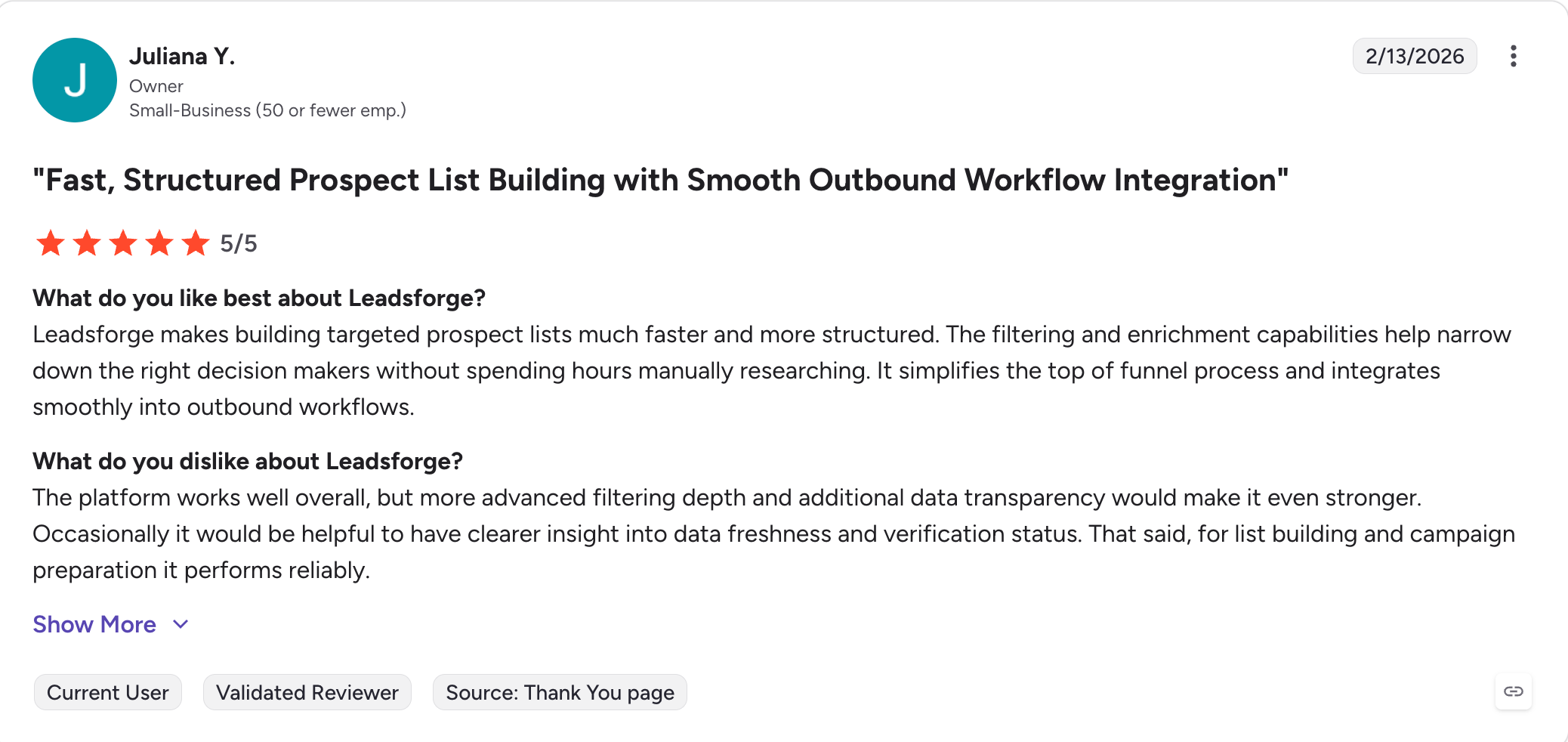
UpLead came out of this research better than it went in. The company publishes a 95% accuracy rate. I normally discount that kind of claim, because every vendor here makes one.
Then I checked what customers say. UpLead holds the best rating here, and its users raise bad data less often than any other reviewers. Nowhere else does the accuracy claim line up with the experience this well.
One credit unlocks a full contact, mobile direct dial and all. Apollo charges one credit for an email and eight for a phone.
I would check the seat structure before buying. Essentials and Plus are single-user accounts. A team means Professional, sold annual-only on a quote.
UpLead Key Features
95% data accuracy rate: Published on the pricing page and supported by the review record.
One credit per full contact: You get the verified email and the mobile direct dial together.
Chrome extension: Works on LinkedIn and company sites.
CRM integrations: Salesforce, HubSpot, Zoho, Pipedrive and Dynamics 365, plus 1,500+ apps through Zapier.
Suppression list uploads: On Plus, so you exclude contacts you already own.
Technographics: Across 16,000+ technologies, on Plus.
Buyer intent data: Available on Professional only.
UpLead Pros And Cons
Pros
Cons
The lowest accuracy complaint rate on this list, against a 4.7 rating
No free plan. The trial runs seven days and five credits
One credit gets the email and the mobile together, with no eight-times phone penalty
Essentials and Plus are single-user accounts. A team means Professional
Data accuracy is its top reviewer pro, which is rare in this category
170 credits a month on Essentials is a small allowance
Suppression lists stop you paying twice for contacts already in your CRM
Overage credits cost $0.60 on Essentials and $0.50 on Plus, above most tools here
UpLead Pricing
Plan
Details
Free trial
7 days, 5 credits
Essentials
$99 a month, or $74 billed annually. 170 credits a month. Single user
Plus
$199 a month, or $149 billed annually. 400 credits a month. Single user
Professional
Annual billing only. Custom pricing, seats and credits
Overages
$0.60 a credit on Essentials, $0.50 on Plus
Effective cost per contact with mobile runs $0.37 to $0.58 depending on plan and billing.
Best for: Sales reps, recruiters and small teams who prospect directly on LinkedIn and want fast reveals without a platform to learn.
Lusha runs on a single workflow. You browse LinkedIn, the extension surfaces contact data, and you export.
Lusha suits you when the Apollo problem is paying for a platform you barely use.
The credit model takes the same shape as Apollo's. An email costs one credit and a phone costs ten, where Apollo charges eight. Lusha loses on that ratio.
I would check rollover before picking a plan. Unused credits carry forward at up to twice your monthly allowance, but only on Pro and Premium.
Selling into Europe adds one more catch. Lusha carries GDPR, CCPA, SOC 2 and ISO 27701 on every tier. No tier includes do-not-call screening, and Cognism has it.
Lusha Key Features
Chrome extension: Surfaces verified emails and phone numbers on LinkedIn profiles and company sites.
Credit rollover: On Pro and Premium only, capped at twice the monthly allowance.
Credit-based reveals: An email costs one credit and a phone number costs ten.
Per-user credit limits: The Scale plan caps each rep, so one person cannot burn the team pool.
Sales Navigator support: The extension reads LinkedIn Sales Navigator lists as well as standard profiles.
CRM integrations: Push revealed contacts straight into your stack.
API and MCP access: On every tier, though free and lower tiers carry strict rate limits.
Compliance certifications: Every tier carries GDPR, CCPA, SOC 2 and ISO 27701.
Best for: Teams that need verified email addresses, never need phone numbers, and are tired of paying per seat.
Hunter does one thing. It finds and verifies email addresses. Domain search covers a whole company, and the email finder handles one person.
Hunter carries no phone data at all, and never pretends otherwise.
The seat model earns it a place on an Apollo list. Every Hunter plan includes unlimited team members, the free one included. Apollo charges $49 to $119 per user a month, so a five-person team changes the math.
I found no complaints about Hunter's data. Reviewers complain about price and running out of credits instead. In a category this full of accuracy problems, that counts as a good place to be.
Hunter.io Key Features
Unlimited team members: On every plan, the free one included.
Domain search: Finds email addresses across a whole company at once.
Email finder and verifier: One tool handles person-level lookup and validation.
Auto-verification and lead enrichment: Included on paid plans.
Discover: Builds B2B lead lists with filters.
Data Platform: An API-only path where you buy credits outright and they stay valid 12 months.
Google Sheets add-on and browser extension: Both let you work outside the app.
Best for: Small sales teams who want CRM-native prospecting and cannot justify per-seat pricing.
LeadIQ repriced in 2026, and almost every article you read about it is wrong. The old per-seat tiers went away. LeadIQ replaced them with universal credits: one pool, a slider, and five users at every step of it.
Five users against Apollo's three-seat minimum at $119 each makes the sharpest per-seat comparison on this page.
Then I hit the data. LeadIQ holds the lowest rating on this list, and its reviewers keep landing on the same complaint. You buy cheap seats, not clean records.
A phone number costs ten credits against one for an email. Apollo applies the same penalty at eight.
LeadIQ Key Features
Universal credits: One credit pool covers every LeadIQ workflow.
Five users included: Every step of the pricing slider carries them, not only the top.
Credit costs: An email costs one credit and a phone number ten. Both together cost eleven, and account enrichment three.
Chrome extension: You prospect directly from LinkedIn.
Track job changes: Follows moves for the contacts you care about.
CRM records enrichment: Updates CRM records and webform data, with Salesforce duplicate detection on Enterprise.
AI outbound message writer: Plus signals covering 10-K filings, podcast mentions and hiring.
LeadIQ Pros And Cons
Pros
Cons
Five users included at every step, the best seat-to-price ratio on this list
The lowest G2 rating on this list at 4.2
One credit pool covers every workflow instead of separate meters
Inaccurate data leads the reviewer complaints, and the second complaint says the same thing
The free plan gives one user and 50 credits to test with
Phone numbers cost ten credits against one for email, so calling teams burn the pool fast
Annual billing saves 25%
Published prices vary widely across sources, so get your quote in writing
LeadIQ Pricing
Plan
Details
Free
$0, 1 user, 50 credits
Pro, entry
From $15 a month billed annually, or $20 monthly. 200 credits a month, 5 users
Pro, top of range
$217.69 a month billed annually, or $290.25 monthly. 6,750 credits a month, 5 users
Enterprise
Custom, annual billing only
Annual billing saves 25%. An email costs one credit and a phone number ten, with both together at eleven.
Best for: Teams that want unlimited-search framing similar to Apollo's Basic tier and will trade data precision for volume.
Seamless.AI runs a real-time search engine instead of serving from a static index.
It also carries the second-largest review base of any tool I looked at. If your Apollo complaint is that search feels capped, the pitch lands.
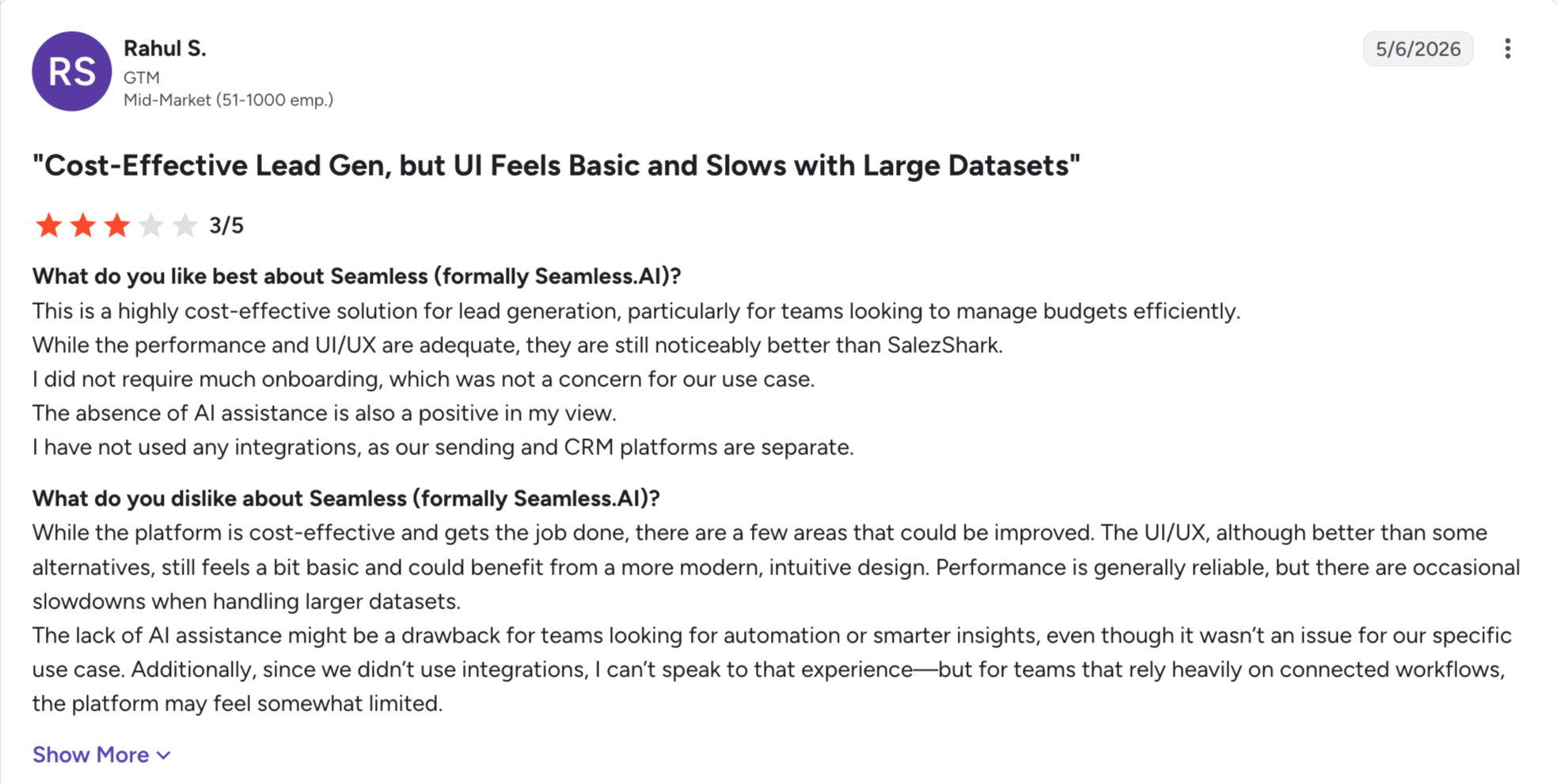
I would not buy it for accurate contacts. More than one reviewer in eight raises bad or outdated records, the worst showing on this list.
Seamless gives away more than most. You get one user and 50 credits, with full access to the search engine, cell phones and API. You can run a real evaluation on that, not a five-lookup teaser.
I would read the contract before signing. Seamless runs annual terms with a 60-day cancellation notice, and billing disputes come up often in reviews.
Seamless.AI Key Features
Real-time search capabilities: The engine researches contacts on demand instead of serving a static record. Every tier gets it, free included.
One credit per full contact: Returns phone and email together on Pro.
Cell phones and email addresses: Both included on every tier, free one included.
API and job changes filter: Every tier carries both. Few free plans in this category do.
Connect: Email, calling and task management inside Seamless, currently bundled on all plans.
Pitch intelligence: Supplies messaging context on a contact, on every tier.
Four paid add-ons: AI assistant, data enrichment, autopilot and buyer intent all cost extra on Pro and Enterprise.
Best for: Teams that want a very large index and will pay annually to stop counting credits altogether.
G2 rating: 4.4 out of 5
RocketReach indexes 700M+ professionals and sells access as lookups instead of credits.
One lookup returns a contact. Pro and Ultimate include verified mobile and direct phone numbers, and Essentials covers email only.
The pricing has a fork in it that changes the whole calculation. Monthly plans give you a fixed lookup allowance and unused lookups roll over. Annual plans give you unlimited lookups instead, and rollover switches off because nothing is left to roll.
Essentials on annual billing works out near $27 a month for unlimited email lookups. No other sales platform I checked offers unlimited that cheaply.
You trade a twelve-month commitment up front, and Essentials carries no phone data at all. Phone numbers start on Pro.
RocketReach Key Features
700M+ professionals indexed: One of the largest contact sets I looked at.
Unlimited lookups: On every annual plan, across all three tiers.
Lookup rollover: On monthly plans, so unused allowance carries forward.
Verified mobile and direct phone numbers: Pro and Ultimate include them. Essentials stays email only.
Autopilot: Runs 10 active jobs on Pro and 25 on Ultimate.
Technographics, news and org charts: Pro and above include all three.
Integrations: Pro and above connect to Salesforce, Outreach, HubSpot and Salesloft.
Intent and healthcare data: Ultimate carries both.
Best for: Solo operators and small teams who need verified emails and mobiles without committing to a subscription.
G2 rating: 4.6 out of 5
Prospeo gave me the most usable free plan of anything I tested. You get 100 credits a month, 28 filters and three intent topics, and it renews every month.
Apollo's free tier hands you 900 credits for the year and stops. Prospeo gives you 1,200 across the same twelve months without asking for a card.
The data covers email and mobile only. No sequencing, no inbox, no CRM. Prospeo never claims to be a sales intelligence platform, so do not buy it as one.
The marketing needs a pinch of salt. Prospeo publishes a 98% email accuracy figure against Apollo's 79%, and claims teams book 35% more meetings. None of it comes with a method. One independent test found only 68% of lookups returned a valid address.
Prospeo Key Features
Free plan with no expiry: 100 credits a month, renewing, with no card required.
Email finder and verifier: Prospeo returns verified addresses and validates them in the same tool.
Mobile number finder: Mobiles cost ten credits where an email costs one.
People and company search: 28 filters on free, rising to 41 on the top tier.
AI search and lookalikes: Describe a target and get matching companies back.
Intent topics: You get three on free, six on Starter, nine on Growth and twelve on Pro.
Chrome extension: Works across LinkedIn and company sites.
CSV, CRM and API enrichment: Bulk paths for teams working outside the app.
The right Apollo replacement depends on which part of the job is actually failing you.
If exported contacts are bouncing, if credits disappear before you get to spend them, or if the filters you need sit behind a three-seat minimum, the problem is the data itself.
Waterfall enrichment runs every lookup across multiple verified providers and falls back to the next one when the first comes up empty, so you are not paying for a miss. Credits never expire, on either plan. Searching and refining a list costs nothing at all, because the charge only lands when you enrich and export.
Signing up gives you 100 free credits.
Run your real ICP through it, export the list, and hold it against your last Apollo export. Fifteen minutes with your own data settles this better than any article can.
1. What is the best Apollo.io alternative in 2026?
Leadsforge, for most teams leaving Apollo over data quality or credit costs. Every lookup checks several providers before charging you, and credits never expire.
2. Is Apollo still worth it in 2026?
Yes, for a small team sending email to US contacts. Apollo scores 4.7 on G2 and bundles data, sequences and a dialer at $49 a seat. The complaints start as you scale. Reviewers lead with data accuracy, a steep learning curve and a restrictive pricing structure.
3. Is there a free Apollo alternative?
Yes, several. Prospeo, Hunter.io, Snov.io and Clay all renew something free every month. UpLead and RocketReach say free plan when they mean trial.
4. Which Apollo alternative has the most accurate data?
UpLead, on the evidence available. Reviewers report that, and no independent test confirms it. I would check bounce rates on your own list first.
5. What does a phone number actually cost?
On Apollo, eight credits against one for an email. Most alternatives charge ten. The pricing model matters more than the headline price once you start dialing.
6. Are there hidden costs with these tools?
Not hidden, but easy to miss. Clay bills two meters at once. Snov.io charges extra for LinkedIn automation, and Cognism sells CRM enrichment as an add-on.
7. Which Apollo alternatives do not charge per seat?
Hunter.io, Clay and Snov.io include unlimited team members on every plan. LeadIQ gives five users at every pricing step, and Cognism gives five seats.
8. Which Apollo alternative is best for EMEA data?
Cognism. The company verifies priority mobile numbers by hand and runs GDPR compliant DNC screening. Expect custom pricing and a demo first.
9. Does Apollo have LinkedIn automation?
No. Apollo's LinkedIn steps are manual tasks, and its own documentation says Apollo does not complete them for you.
Book more meetings on autopilot
Set up in minutes. No per-seat pricing. No commitment.










.jpg)