There are about forty tools calling themselves AI sales agents right now. But only nine of them are worth your time.
I know that because I have run most of them against live campaigns. I also build one of them.
Puzzle Inbox tested Agent Frank independently across three accounts. They sent 12,400 emails over 90 days and booked 41 meetings. That works out at $42 a meeting, against $675 for a human SDR.
The AI SDR category has evolved fast enough that half of what you read about these tools is already wrong.
So I ran each of these nine against the same test. Each one got the same list, the same offer and the same sending setup. The only thing that changed was the tool.
Below I cover what each one costs today, how many meetings it booked, and which kind of team it suits.
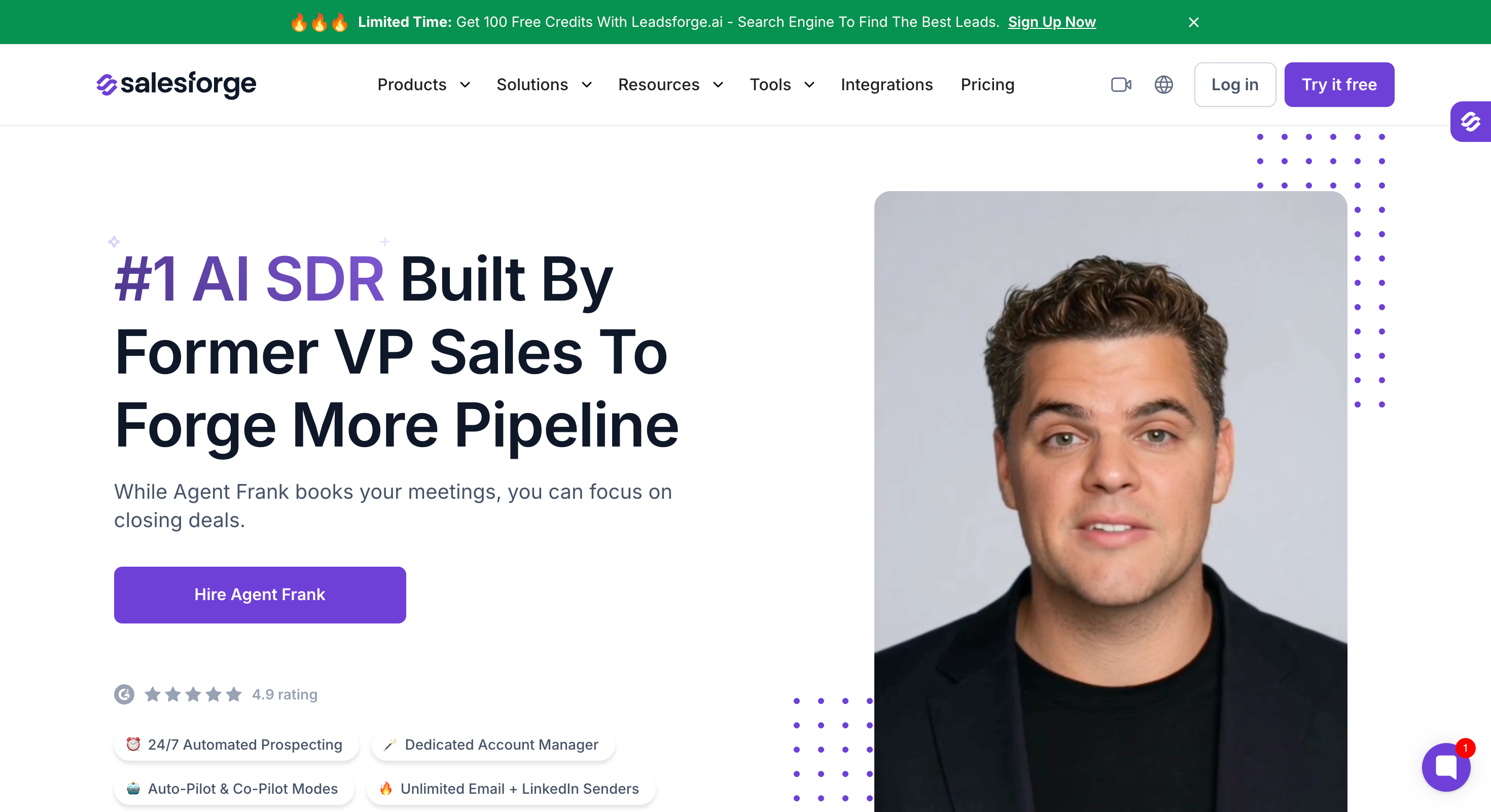
Agent Frank: Best overall AI SDR for outbound. He runs Auto-Pilot or Co-Pilot on his own Intelligence layer, and he sends from his own infrastructure rather than yours. No seat-based pricing.
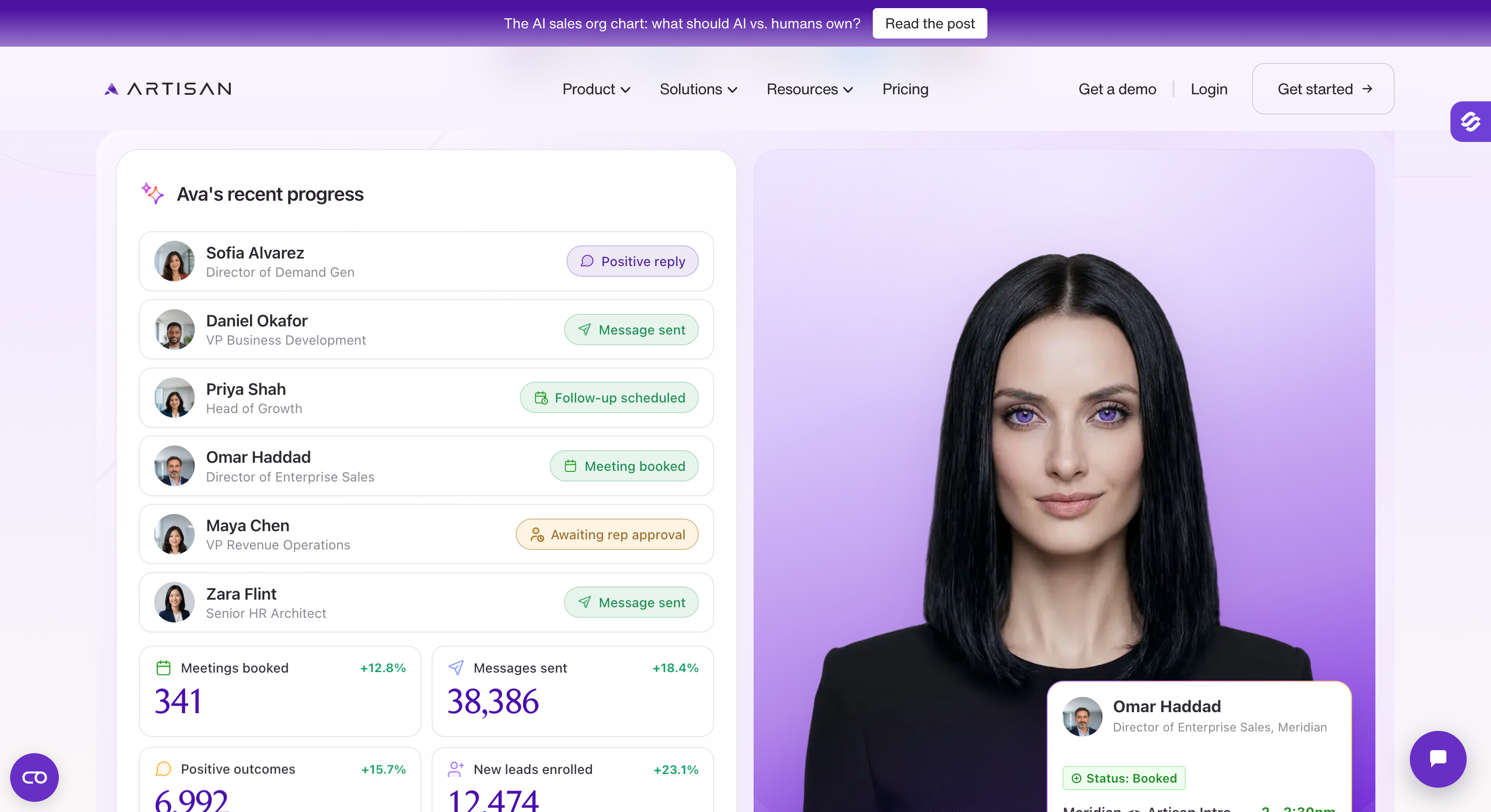
Artisan: Best for teams who want contact data and sending in one bill. Ava 2.0 bundles 250M+ contacts with a dialer, and warm-up comes with the plan.
11x: Best for enterprise teams who have a budget and a procurement process. Alice handles outbound and Julian calls your inbound leads back inside a minute.
AiSDR: Best for teams who want email and text in one agent. Every price sits on the website, and the entry plan runs month to month.
Chase: Best if you only want to pay for results. You pay for each meeting that actually holds, and a no-show costs you nothing.
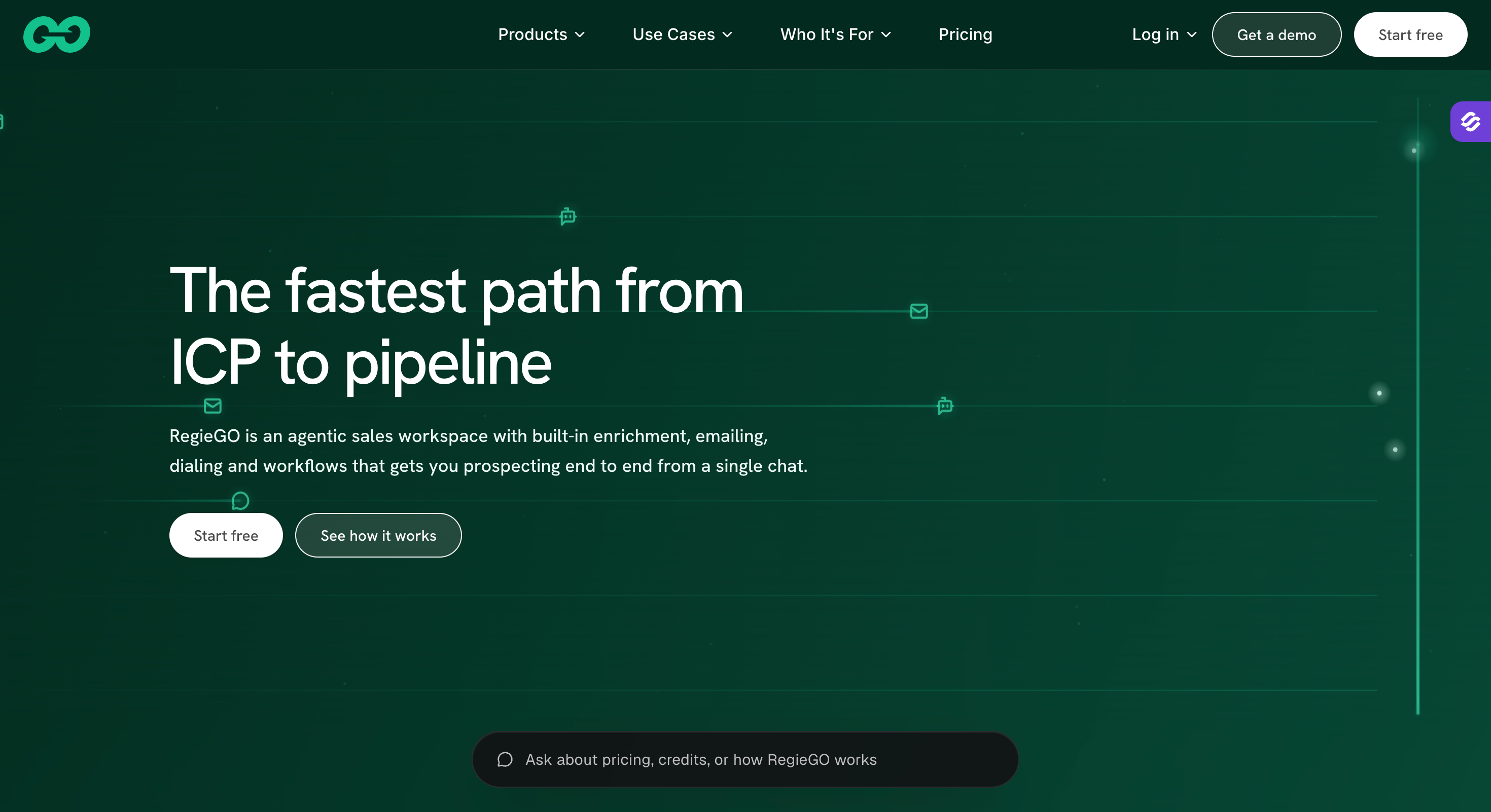
Regie.ai: Best for teams who want a human in the loop. Agents draft inside a sequencer, and a nine-line parallel dialer sits next to it.
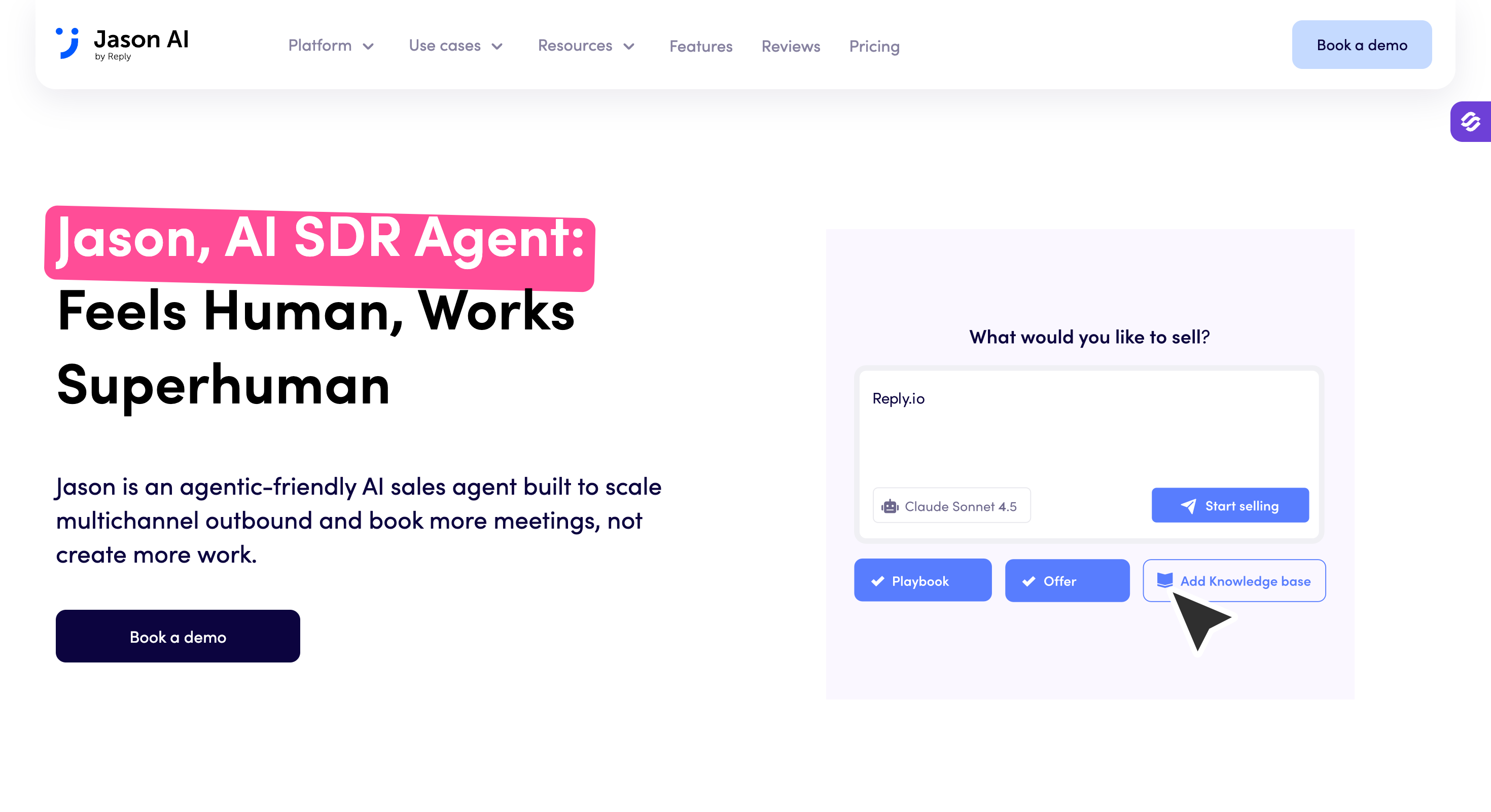
Reply.io Jason AI: Best for teams who already run Reply.io. Jason adds an agent to a sequencer your reps already know.
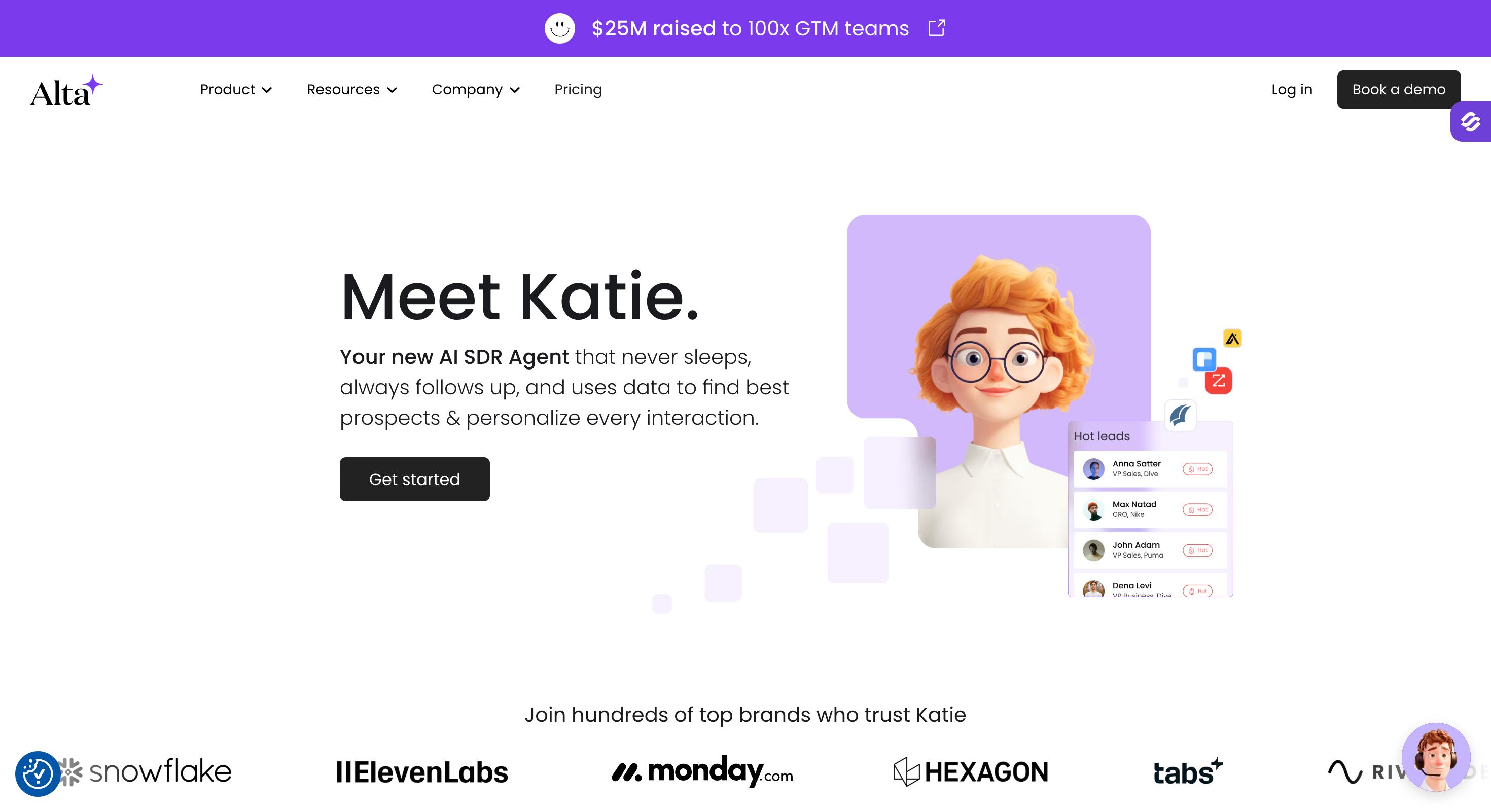
Alta: Best for teams who want one agent across outbound and inbound. Three agents share one data layer, and pricing sits behind a sales call.
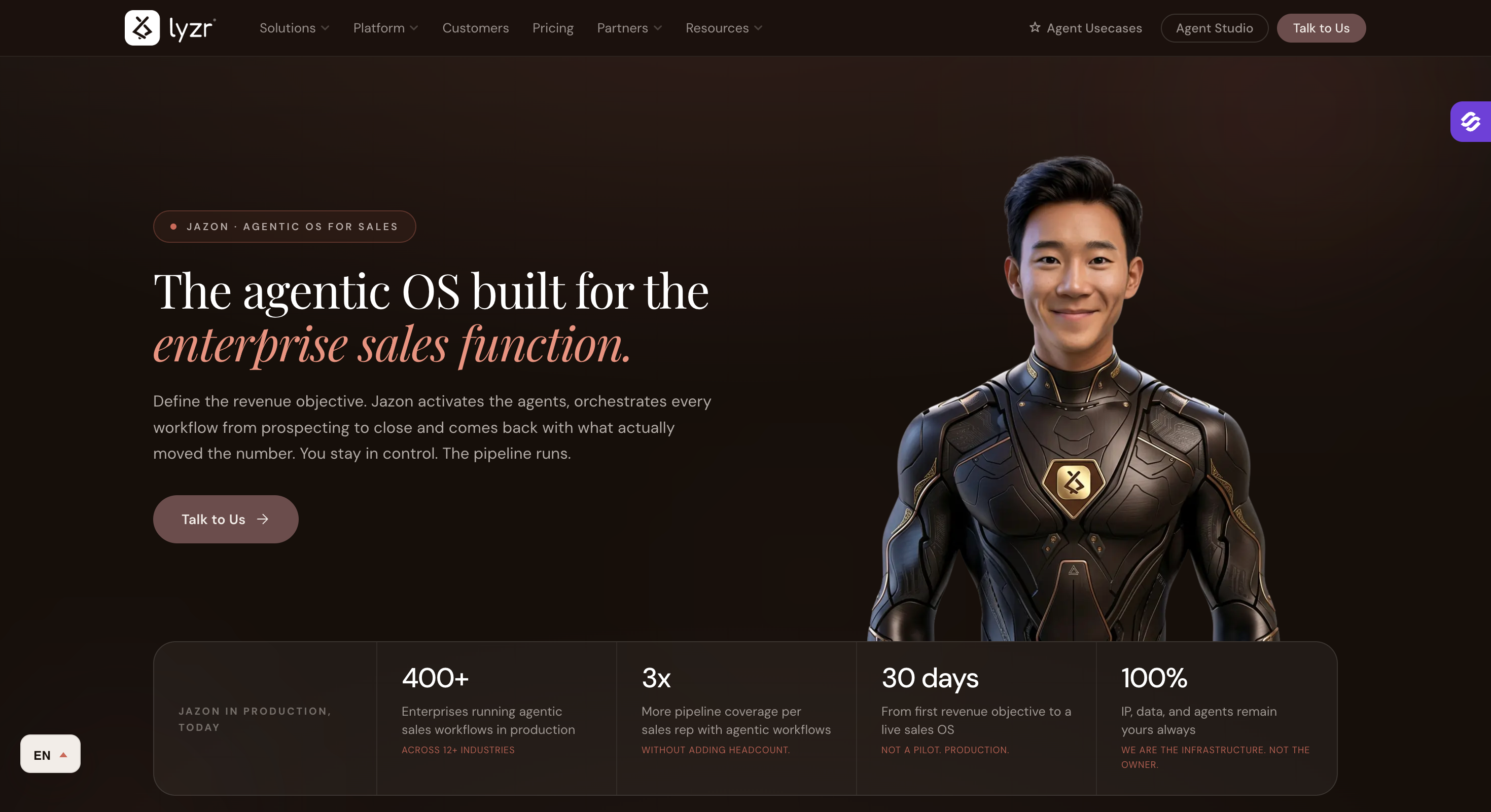
Jazon: Best for teams who want to shape the agent themselves. He runs on your own servers, and Lyzr offers a three-month pilot.
What Is an AI Sales Agent (AI SDR)?
An AI sales agent finds prospects, writes the emails, sends the follow-ups and books the meeting. You set the target and it runs the rest without you.
Most people call them AI SDR tools, and some vendors say AI BDR or SDR software. They all mean the same thing. SDR stands for sales development representative, which is the person who does this job by hand.
The job splits into five parts, and a real agent does all five.
Prospecting: It builds the list from your ideal customer profile rather than waiting for you to upload one.
Enrichment: It finds the email address and checks that the address works.
Writing: It drafts each message from what it knows about that person and their company.
Sending and following up: It runs the sequence, waits the right number of days, and stops when someone replies.
Booking: It reads the reply, works out whether it is a yes, and puts the meeting on your calendar.
Plenty of tools call themselves AI sales agents while doing two or three of those. I do not count those here. A sequencer with an AI writing feature is not an agent. Neither is a research tool that hands you a report.
The nine below all do most of the five. Where one falls short, I say so in its section.
Autonomous or Assisted
Every tool here runs one of two ways, and the difference matters more than any feature.
Autonomous means the agent sends without asking. You approve the setup once and it works your list on its own.
Assisted means the agent drafts and you approve each message before it goes. Slower, and safer if your brand or your domain cannot absorb a mistake.
Most tools offer both. Watch the ones that only offer autonomous sending. A bad first week there costs you a domain rather than an afternoon.
How I Tested These AI Sales Agents
I scored each one on the four things that decide whether you keep it, because the point of these tools is higher sales efficiency, often by increasing output three to ten times.
Does it do the whole job: A real agent prospects, finds the contact details, writes, sends and books. Several here do four of those and hand you the fifth. I checked each one against all five and say in its section where it stops.
What it costs at volume: The headline price is rarely the price. I counted the mailboxes, the domains, the credits and the contact data you have to buy on top. Two tools on this list look cheap at ten contacts and expensive at a thousand.
What it does to your domains: An agent sending thousands of emails a month can burn the domains you already sell from. I looked at whether each tool warms its own mailboxes, spreads sending across them, and stops when bounces climb.
How it handles a reply: Most of them fall down here. Reading "not right now" and filing it correctly is harder than writing the first email. The gap between tools is wider than any feature list suggests.
Feature Comparison: Top 9 AI Sales Agents At a Glance
Here is how the nine compare on the four things I scored.
Teams automating the whole meeting-booking process
$499/mo annual
Yes, same sequence
Yes, 500M+ built in
Own domains and mailboxes
Learns from your corrections
Auto-Pilot or Co-Pilot
Artisan
Teams who need contacts and sending on one bill
$250/mo self-serve
Yes
Yes, 250M+
Own mailboxes
Signal-based targeting
Both
11x
Enterprise teams with a procurement process
$3,750/mo annual
Yes
Yes
Included in contract
Outbound and inbound agents
Both
AiSDR
SMB teams who need email and text in one agent
$250/mo
Yes
Yes, 700M+
Partial
Reads 323+ sources
Both
Chase
Founders who only pay for held meetings
$39/mo + $250 per meeting
No
Yes
Sets up your domains
No
Autonomous only
Regie.ai
SDR teams who want drafting without losing control
$180/user/mo
No
Yes, 220M+
Mailboxes on top plan
Intent signals
Approval by default
Reply.io Jason AI
Teams already running Reply.io
Add-on to Reply.io
Yes
Yes, 1B+
Own mailboxes
Research Agents
Both
Alta
Revenue teams who need outbound and inbound
Not published
Yes
Yes
Own mailboxes
Company Brain, 3 agents
Both
Jazon
Technical teams who want to shape the agent
Not published
Yes
Partial
Your own servers
Email-trained model
Both
1. Agent Frank
Best for: GTM teams and founders who want the whole meeting-booking process automated.
G2 rating: 4.6 out of 5
Agent Frank is an AI SDR you hire book more meetings autonomously.
He prospects, writes, sends and books meetings on his own. I built him, so read this section knowing that.
He works two ways:
Auto-Pilot: He finds the leads, writes the messages and sends them without asking you first. You watch the replies come in and step in when you want to.
Co-Pilot: He drafts every message and waits for your approval before anything goes out. Slower, and the mode I would start on.
You decide how many contacts he works at once, and he scales from a thousand to fifty thousand. Teams using tools like this have handled 130,000 leads in four months by offloading repetitive sales work. Even the smallest plan sends 6,000 to 7,500 emails a month. He writes each one for the person who gets it.
He also replaces the tools around the job. Prospecting comes with the plan, warm-up comes with the plan, and the sending domains come from Infraforge or Megaforge.
Every other tool on this list expects you to buy at least one of those somewhere else.
Agent Frank Key Features
Runs the whole job: Frank prospects, finds contact details, writes, sends and books. He never hands part of it back to you.
Auto-Pilot or Co-Pilot: You choose whether he sends on his own or waits for your approval on every message.
500M+ contact search built in: Lead generation comes with the plan. You do not buy a second tool for data.
Builds ABM lists: He works a named account list, finds the stakeholders inside each company and messages them in sequence.
Continuous prospecting: He keeps looking for new leads that match your ICP rather than working one uploaded list until it runs out.
Researches before he writes: He reads the company, the buying signals and the likely objections, then writes from what he finds.
Customize your agent: You upload your brochures, docs and website, and he learns your product from them.
Gets better from your feedback: Corrections you make in Co-Pilot become memories he uses on the next campaign.
20+ languages: He writes in the prospect's language. He does not translate an English draft.
Nine tones of voice: You pick how he sounds, from formal to playful.
Three goals: He can ask for a click, send your calendar link, or ask for theirs.
Intelligence layer: He reads the company, the buying signals and the sources you point him at, then writes from what he finds rather than from a template.
Working hours: You set his time zone, his days and his sending times, so he does not email people at midnight.
Email and LinkedIn in one sequence: Steps branch across both channels rather than running one at a time.
Unlimited senders: You add as many mailboxes and LinkedIn senders as you want, and the price stays the same.
Warm-up included: Warmforge warms every mailbox before he sends, and it comes with the plan.
Megaforge spreads the sending: Volume splits across Gmail, Outlook, Mailforge and Infraforge mailboxes, so one burnt domain does not stop the campaign.
Dedicated account manager: Every plan includes one, plus a shared Slack channel.
Why Frank Tops This List
I put Frank first for three reasons.
He books meetings far cheaper than a person:Puzzle Inbox ran Frank across three accounts for 90 days. They booked 41 meetings, which comes to about $44 each. A human SDR books them at $300 to $450.
Nothing else here gives you the sending side: Artisan and AiSDR write and send, then leave the domains to you. Frank sends from domains he warms himself, so your company domain never takes the load.
Your bill stays flat as you grow: Regie.ai charges per user and 11x charges per seat. I added three people to Frank last quarter and my bill did not move.
What I Liked About Agent Frank
Prospecting comes with the plan, so there is no second data subscription to buy, and the built-in prospecting reduced manual data entry for the team.
He learns the product once from the Knowledge Base. I did not rewrite prompts for each campaign.
Co-Pilot let me watch the first two weeks before handing over the sending, with routine tasks offloaded so reps could focus elsewhere.
He sends from separate domains, so my main one never carried the volume.
What Are the Cons of Agent Frank
There is no free trial. You book a demo before you can buy.
The mailboxes and domains cost extra.
Agent Frank Pricing
Plan
Price
What you get
Annual
$499/month, billed annually
1,000 active contacts at any time
Quarterly
$599/month, billed quarterly
The same, paid every three months
Volume
$0.25 per contact
Applies above 2,000 contacts a month
There’s no free plan or free tier here, only the paid plans shown above.
A thousand active contacts means 2,000 to 2,500 new leads and 6,000 to 7,500 emails a month. Mailboxes and domains cost extra.
Best for: Sales teams who need contacts and sending on one bill.
G2 rating: 3.9 out of 5
Artisan sells an AI BDR called Ava. She searches a contact database and picks the leads worth chasing. Then she writes the outreach, sends it, and books the meeting when someone answers.
The reason Artisan belongs near the top is what comes in the box. Ava pulls from 250M+ B2B contacts and fills in each one across 22+ sources. You do not buy a data tool on the side. Warm-up and deliverability monitoring come with it too.
She also picks her targets rather than working a list in order. Funding rounds and leadership hires push a prospect up the queue. A good SDR does the same thing by hand.
The catch is what happens when a reply gets complicated. Ava handles a simple objection well. She does not handle a buyer who wants to argue about your pricing model.
Artisan Key Features
250M+ contact database: Prospecting comes with the platform. You do not buy a separate data subscription.
Enriches from 22+ sources: She fills in each contact from more than twenty places before writing anything.
Picks leads by signal: Funding rounds and leadership hires move a prospect up her queue.
Writes and tests variants: She runs dozens of message versions per campaign and sends more of whatever wins.
Email and LinkedIn: Both channels run from the same platform.
Native dialer: Reps call from inside Artisan, with a brief before the call and a summary after.
Handles replies: She answers simple objections and books the meeting without passing it back.
Warm-up built in: Mailbox warming and deliverability monitoring come with the plan.
CRM sync: She writes to HubSpot and Salesforce.
What I Liked About Artisan
The interface is the best-looking one on this list, and it made setup quick.
Data and sending in one place meant one bill instead of three.
The variant testing did real work. My best-performing message was not the one I would have picked.
She replied to prospects in minutes, where my team took hours.
What Are the Cons of Artisan
Reviewers keep flagging data accuracy. I hit stale records often enough to re-verify before sending.
The writing reads like AI more often than the marketing suggests.
She struggles with a reply that needs real thought, so complex deals still need a person.
G2 reviews split hard between five stars and one star, which usually means it fits some teams and not others.
Support comes up as a complaint often enough to take seriously.
Artisan Pricing
Plan
Price
What you get
Self-serve
From $250/month
Ava, the contact database and sending
Enterprise
Custom
Higher volume, priced on a call
Artisan dropped its entry price from $2,500 to $250 a month in May 2026.
Best for: Enterprise revenue teams who can sign an annual contract.
G2 rating: 4.4 out of 5
11x sells two agents rather than one. Alice runs outbound across email, LinkedIn and SMS. Julian answers the phone when a lead comes in.
That pairing is the reason 11x sits on this list. Every other tool here works one direction. A form comes in on your site. Julian calls it back inside a minute, qualifies the person and books the meeting. Alice handles everything going the other way.
11x calls both of them digital workers rather than software, and prices them that way. You buy an agent and a lead volume, not seats.
The company has raised more than $70M from a16z and Benchmark since 2023. That shows in the product and in the price.
11x Key Features
Alice runs outbound: She finds prospects, researches each one, writes the emails and works the follow-ups.
Julian answers inbound: He calls a new lead within 60 seconds, qualifies them and books the meeting.
Three channels on outbound: Email, LinkedIn and SMS run from the same sequence.
Four channels on inbound: Julian works across phone, SMS, WhatsApp and chat.
Priced by leads: You pay for the volume Alice works, not for the emails she sends.
Mailboxes included: Setup and deliverability support come with the contract.
CRM sync built in: Salesforce and HubSpot connect without an extra bill, and these AI sales tools are built to fit into existing sales workflows.
Onboarding included: The contract covers setup rather than charging for it on top.
For most buyers, 11x is sold through custom pricing rather than a true self-serve plan.
4. AiSDR
Best for: SMB sales teams who need email and text in one agent.
G2 rating: 4.6 out of 5
AiSDR is an AI sales rep that works email, LinkedIn and text from one place. It researches each prospect, writes the message, answers the reply and books the meeting.
The thing it does better than anyone here is publish its prices. Three tiers sit on the website, and the cheapest one is $250 a month with no contract. Every other tool at the top of this list wants a call first.
It also ships with the data. The 700M+ lead database comes with every plan, so you are not paying Apollo or ZoomInfo on the side.
Setup is fast too. A GTM engineer sets up your ICP, your messaging and your CRM sync. Most teams go live inside a week.
Where it stops short is the phone. There is no dialer, so calls run through Aircall or they do not run at all.
AiSDR Key Features
Email, LinkedIn and text: Three channels run from the same agent, with text included rather than sold as an add-on.
700M+ lead database: Prospecting comes with every plan. You do not buy a data tool on the side.
Researches from 323+ sources: It reads widely before writing, and reviewers say the output does not read like a template.
Replies in minutes: It answers a positive reply within five to ten minutes rather than the next morning.
Two-way HubSpot sync: Lists, account scoring and activity logging work both directions on every tier.
GTM engineer sets it up: A person builds your ICP, messaging and sync before you launch.
Credits roll over: Unused messages carry into the next quarter while your plan is active.
60+ languages: It writes in the prospect's language.
Ami builds the strategy: A second agent drafts your ICP, your angles and your sequences.
Best for: Founders and agencies who only want to pay for meetings.
G2 rating: Too few reviews to score
Chase is the only tool here that charges you for results. You pay $39 a month to run it, then $250 for each meeting that actually happens.
Read that last part carefully. Their terms define a held meeting as one the prospect attends, in person or on a call. A booked meeting that nobody turns up to costs you nothing.
That model changes who carries the risk. Every other tool on this list takes your money whether it books anything or not. Chase only gets paid when someone sits down with you.
It also handles the sending side itself. Chase picks your domains, creates the mailboxes, sets the DNS records and warms everything before it sends.
The catch is what happens when it works. Ten held meetings a month costs $2,539. At that volume most tools here are cheaper, and some are much cheaper.
Chase Key Features
You pay for held meetings: $250 lands on your bill when a prospect attends, not when one books.
Runs the full job: It builds the list, writes the copy, sends the outreach and books the meeting.
Sets up your sending: Chase suggests domains, creates mailboxes, sets the DNS records and warms every inbox.
Writes the copy for you: Copywriting comes with the service rather than being your job, and the agent performs the work instead of only drafting suggestions.
Handles the reply: It answers questions, sends resources, deals with referrals on its own and can send follow up emails as part of the same automated flow.
Passes hard ones over: Anything it cannot handle goes to your team with the context attached.
Books across the team: It proposes times against every calendar and sorts out time zones.
Built for you: They write the messaging around your offer instead of picking it from a template library.
Reporting dashboard: You watch progress and results in one view.
What I Liked About Chase
Paying only for meetings that happened made the first month easy to justify internally.
They set up the domains and mailboxes, so I did nothing on the sending side.
Copywriting came with it, which no other tool on this list offers.
No-shows cost me nothing, and every other tool charges the same whether people turn up or not.
What Are the Cons of Chase
It gets expensive when it works, because ten held meetings a month costs $2,539.
You control volume less than anywhere else here, because Chase decides how hard to push.
There are too few public reviews to judge it the way you can judge the bigger tools.
Charges land after the fact, so your bill moves month to month.
Extra contacts, mailboxes and domains all bill separately on top.
Chase Pricing
Item
Price
Base
$39/month, including 500 contacts
Held meeting
$250 each
Extra contacts
$0.06 each
Mailboxes
$4.50 per mailbox a month
Domains
$12.50 per domain a year
6. Regie.ai
Best for: SDR teams who want AI drafting without losing control.
G2 rating: 4.4 out of 5
Regie.ai took the opposite bet to everyone else here. Its agents research, rank and draft, then hand the work to a rep who decides what goes out.
That is the whole product. Regie calls it a force multiplier. One SDR with agents behind them does the work of several.
The platform grew out of a writing tool, and I think it now wants to replace your sequencer. RegieOne bundles sequencing, agents, a dialer, contact data and intent signals into one system, aimed squarely at Outreach and Salesloft.
The dialer is the part my reps talked about. It runs nine lines at once. A rep waits for a pickup instead of sitting through nine rings.
Where it costs you is the shape of the contract. Ten seats minimum on the cheaper plan, annual billing only, and no way to try it first.
Regie.ai Key Features
Agents draft, reps approve: The work reaches a person before it reaches a prospect.
220M+ contact database: Contact data comes with the platform.
Parallel dialer with nine lines: It calls nine numbers at once and connects the rep to whoever picks up.
Email, phone and LinkedIn: Three channels run from one sequence.
Intent signals: Agents sort your list so reps work the warmest accounts first, with intent data helping show which accounts to prioritize.
Writes more than emails: It drafts call scripts, voicemail drops, sales scripts, and social messages too.
Mailboxes on the top plan: Force Multiplier includes ten of them.
Works with your stack: It connects to Salesforce, HubSpot, Outreach, Salesloft, Gmail, Outlook and LinkedIn.
Campaign health score: One number tells you whether a campaign is working, giving sales managers a faster view of rep execution.
What I Liked About Regie.ai
Nothing went out without a person seeing it first, which made the first month far less nervous.
The parallel dialer changed how my reps spent an afternoon. Nine lines beats nine rings, and it let sales reps spend more time on higher-value conversations.
Writing a sequence took two or three minutes instead of the twenty it used to, which reduced repetitive sales tasks.
It slotted into Salesforce and Outreach without me rebuilding anything.
What Are the Cons of Regie.ai
Ten seats minimum on the entry plan, so the real floor is around $21,600 a year.
The contracts run annually. There is no monthly option and no self-serve trial.
Per-user pricing punishes you for growing, where the agent-priced tools do not.
Reviewers keep flagging a robotic tone, and reps edit more than the time savings suggest.
G2 reviews mention wrong phone numbers and prospect mismatches, so check the data on your own list.
Regie.ai Pricing
Plan
Price
What you get
AI SEP
$180/user/month
Sequencing, intent sorting, power dialer, 10-seat minimum
Force Multiplier Rep
$499/user/month
Adds parallel dialing, enrichment and 10 mailboxes, 5-seat minimum
RegieOne
From $35,000/year
The full platform, quoted on a call
The parallel dialer costs $150 per user a month on the cheaper plan. Both tiers bill annually.
Best for: Teams already running Reply.io sequences.
G2 rating: 4.6 out of 5
Jason is the AI SDR that sits inside Reply.io. He finds the leads, writes the outreach and works the follow-ups. He answers the replies too, inside sequences your team already knows.
That is the whole pitch. You are not learning a new platform. You are adding an agent to the one your reps open every morning.
Reply itself brings more channels than anything else here. Email, LinkedIn, calls, SMS and WhatsApp all run in one sequence, and no competitor ships that many natively.
The contact database is the biggest on this list too, at more than a billion records across 150+ countries.
Two things I would watch. Jason costs extra on top of your Reply plan, and the published figures for him vary widely. And Reply takes a week or two to learn, because five channels and an agent is a lot of interface.
Jason AI Key Features
Works inside Reply.io: Your reps keep the sequences and the interface they already use.
Five channels: Email, LinkedIn, calls, SMS and WhatsApp run from one cadence.
1B+ contact database: Jason sources leads from Reply's own data across 150+ countries.
Research Agents: You pick up to three angles for him to write from, like company news or recent activity, to support cold outreach personalization.
Handles replies: He answers questions, books the meeting and keeps the thread moving.
Scores your prospects: He ranks leads on engagement so reps work the warm ones first, which also helps with lead qualification.
Deep CRM sync: Two-way sync with Salesforce, HubSpot, Pipedrive and Copper, refreshing every two hours.
700+ integrations: Zapier and Make connect the rest of your stack, so Jason fits into your existing systems and broader sales stack.
Built-in deliverability: Warm-up and sending health come with the platform, which matters when AI workflows run across multiple channels.
Best for: Revenue teams who need outbound and inbound in one agent.
G2 rating: Too few reviews to score
Alta gives you three agents instead of one. Katie runs outbound, Alex works the phone, and Luna reports on what the other two did.
They share what Alta calls a Company Brain, which is a single data layer all three read from. A call Alex takes teaches Katie something about who to target next.
The loop reaches further than most. Signals from calls also feed your Google Ads and Meta audiences. The same data that shapes your outreach shapes your paid spend. Nothing else on this list does that.
Alex is the number worth knowing. He calls an inbound lead back in under thirty seconds, against an industry average that sits around 42 hours.
Alta launched from stealth in March 2025 and raised a $25M Series A in July 2026. The customer list runs to Snowflake, Deel and monday.com, who reported a 40% lift in SDR productivity.
The problem is that you cannot check much of this before a sales call.
Alta Key Features
Three agents, one brain: Katie prospects, Alex calls and Luna reports, all reading the same data.
Sub-30-second callbacks: Alex rings a new inbound lead before they have closed the tab.
Pulls from 50+ sources: Katie combines your CRM with outside signals, including predictive analytics on customer behavior, to find high-intent accounts.
Email, LinkedIn and phone: Outbound runs across all three from one sequence.
Feeds your ad audiences: Call and inbound signals sharpen targeting in Google Ads and Meta.
Luna watches the numbers: She writes the reports, surfaces deal insights from call and pipeline activity, and flags anything that moves unexpectedly.
Deep CRM sync: Salesforce, HubSpot and Pipedrive connect natively, with 50+ more beyond that.
SOC 2 Type II and ISO certified: Security review will not be the thing that blocks you.
What I Liked About Alta
The shared data layer did real work. Katie targeted better after Alex had taken a few calls.
Calling a lead back inside thirty seconds changed how many of them stayed interested.
Luna saved my RevOps person a morning a week on reporting.
Feeding call signals into paid targeting is something I have wanted for years and never had.
What Are the Cons of Alta
Pricing sits behind a sales call, and third-party reports put contracts between $30,000 and $60,000 a year.
There are too few public reviews to judge it properly. One independent analysis confirmed only 6.5% of its claimed features.
It is young. The company came out of stealth in 2025, so there is not much of a track record.
Three agents means three things to configure, and setup takes longer than the simpler tools here.
Alta publishes few numbers on data coverage or accuracy, so you cannot check fit before you buy.
Alta Pricing
Plan
Price
What you get
Starter
Reported at $119/month
One mailbox, one LinkedIn profile, basic personalization
Best for: Technical teams who want to shape the agent themselves.
G2 rating: Too few reviews to score
Jazon is the AI SDR that Lyzr built on top of its own agent platform. He researches prospects, writes the emails, works LinkedIn and books the meetings.
The difference is where he runs. Jazon deploys into your own private cloud or onto your own servers, which no other tool on this list offers.
That matters if your data cannot leave the building. Banks, hospitals and government teams live under rules about where customer records sit. Most AI SDRs fail that test before the demo starts.
Jazon also writes from a model Lyzr trained on email. Most tools here use a general model and ask it to sound like a salesperson.
The catch is that Lyzr is a platform first and an SDR second, closer to ai sales agent software for builders than a plug-and-play tool. Jazon is one of several agents it ships, alongside ones for marketing, HR and support. You are buying a toolkit, and Jazon is what you build with it.
Expect setup to take longer than anything else here. Teams without a technical person will feel that.
Jazon Key Features
Runs on your own servers: Deploy into a private cloud or on-premises, and the data never leaves.
Email-trained model: Lyzr built a model for outreach rather than adapting a general one, unlike a more general AI assistant.
Email and LinkedIn: Both channels run from the same agent.
Books meetings: Calendar integration handles the scheduling without a person.
SOC 2 and ISO 27001: The certifications your security team will ask for.
Model-agnostic: Point it at whichever language model you prefer, choose the AI model that fits your needs, and swap later.
PII redaction built in: Sensitive data gets stripped before it reaches the model.
Other agents included: The same platform ships agents for marketing, HR, support and more, and technical teams can build agents on top of it too.
Three-month pilot: Lyzr offers eligible customers a free trial period longer than anyone here.
What I Liked About Jazon
Running it on my own servers answered a security question that killed three other tools.
The email model wrote better first drafts than the general-purpose tools did.
A three-month pilot gave me long enough to see whether it worked, which a 14-day trial never does.
I could change how the agent behaved rather than choosing from nine preset tones, which suits teams with technical expertise.
What Are the Cons of Jazon
Setup takes real technical work. Without an engineer, you will struggle.
Lyzr sells a platform, so Jazon gets less focus than a product built only to do outbound.
Jazon's price is not published. You ask, and the answer depends on your deployment.
There are too few public reviews of Jazon itself to judge it against the bigger tools.
If you want pipeline this month rather than a system you own, this is the wrong end of the list.
Jazon Pricing
Plan
Price
What you get
Agent Studio Free
$0
The platform, for building and testing
Agent Studio Pro
$99/month
The platform with production limits lifted
Jazon
Quoted on request
The SDR agent, priced by deployment
Lyzr publishes Agent Studio pricing and quotes Jazon separately. Cloud runs bill at around $0.08 per agent run.
AI Sales Agent vs Human SDR: What Each Costs
The math is the reason this category exists. I ran the numbers on my own setup.
Human SDR
Agent Frank
Base cost
$60,000 salary
$5,988 a year
Tax and benefits
$15,000
None
Tools and data
$6,000 a year
Included
Sending setup
Included in tools
$828 a year
Total
$81,000
$6,816
Meetings a year
120 at ten a month
164, from an independent test
Cost per meeting
$675
$42
Time to full output
Three months
Two weeks of warm-up
I used a $60,000 salary, a 25% loading for tax and benefits, and $500 a month in tools. Adjust those for your market.
Final Verdict: Which AI Sales Agent Should You Pick?
You came here because nobody is doing the top of the funnel.
Somebody has to build the list and send the follow-ups, so your closers do it instead. They spend their mornings researching companies.
I built Agent Frank because I got tired of watching that happen.
He finds the people, writes the message and sends it. He warms his own domains, so the volume lands on his and not yours. The prospecting comes with him, and you buy nothing extra for data. When you add someone to your team, your bill stays where it is.
If your reps have the time and your list is already built, stay where you are.
If they do not, this is the version of your week where your closers spend their mornings closing.
An AI SDR finds prospects, writes the outreach, sends the follow-ups and books the meeting. It does the job a sales development rep does by hand, at a volume no person matches. Most tools use AI SDR and AI sales agent to mean the same thing, and they are a type of sales ai agent.
2. What is the best AI sales agent?
It depends on what you need, and I would not pick one for you. Agent Frank runs the whole job and includes the data and the sending. Artisan bundles contacts and sending for less. 11x and Alta answer inbound calls in under a minute. Chase charges only when a meeting happens.
3. Do AI sales agents actually book meetings?
Yes. An independent test of Agent Frank across three accounts logged 12,400 emails, 287 replies and 41 meetings over 90 days. Reply rates sit below a good human SDR, and the volume makes up the difference.
4. How much does an AI SDR cost?
I found entry prices on this list running from $39 a month to $3,750. Most land between $250 and $600 for one agent. Add sending infrastructure and contact data on top unless the tool includes them.
5. Can an AI SDR replace my sales team?
No. An agent handles the top of the funnel, which means research, first contact and follow-up. It does not read a room, and it cannot truly replace the human touch in complex sales conversations, spot a bad fit or close a deal. Most teams run an agent and keep the people.
6. Are AI sales agents safe for my domain?
Only if the tool sends from its own domains and warms them first. An agent sending thousands of emails a month from the domain you sell from can burn it. Check whether warm-up comes with the plan before you buy.
7. How long before an AI SDR starts sending?
Two weeks is normal, because new mailboxes need warming before they send at volume. Tools that let you use existing mailboxes go faster and carry more risk.
Check whether it does all five jobs or hands one back. Work out the real price once you add mailboxes and data. Ask what it does to your domains. And find out how it handles a reply, because that is where most of them fall down, then check AI sales tools for CRM integration and whether the tool fits your existing systems.
Book more meetings on autopilot
Set up in minutes. No per-seat pricing. No commitment.
Discover the 7 best LinkedIn AI SDRs to scale outreach in 2026. Compare features, pros, cons, pricing, and find the right tool to book more meetings fast.
.png)

.png)
.avif)